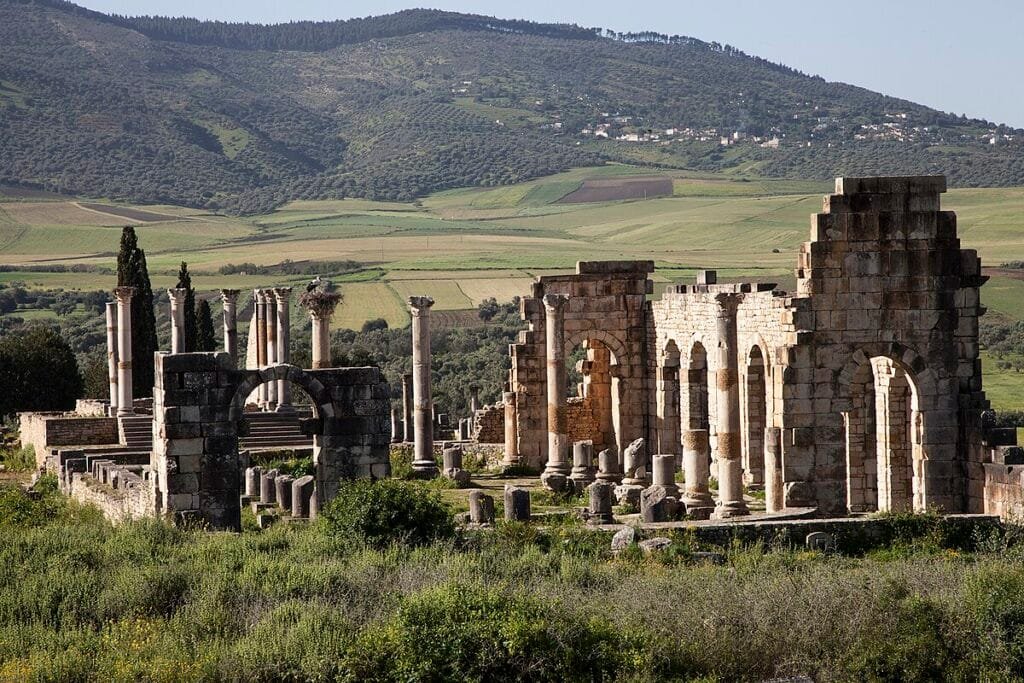
Morocco, a land of captivating contrasts and ancient wonders, boasts a history as rich and diverse as its landscapes. From the earliest human settlements to its vibrant present, this North African nation has been a crossroads of civilizations, a melting pot of cultures, and a testament to resilience. Its strategic location at the confluence of Europe and Africa, with coastlines on both the Atlantic and the Mediterranean, has shaped its destiny, drawing in Phoenicians, Romans, Arabs, and European powers, each leaving an indelible mark on its identity. This comprehensive journey through Morocco’s past will explore the pivotal moments, influential dynasties, and significant transformations that have forged the unique character of this remarkable country.
Table of Contents
Early Inhabitants and Phoenician Influence
The story of Morocco begins long before recorded history, with evidence of human habitation dating back to the Paleolithic era, over 300,000 years ago [6]. The indigenous people of Morocco, the Berbers (or Amazigh), have inhabited the region for millennia, forming tribal societies across the diverse landscapes [8]. Their rich cultural heritage forms the bedrock of Moroccan identity.
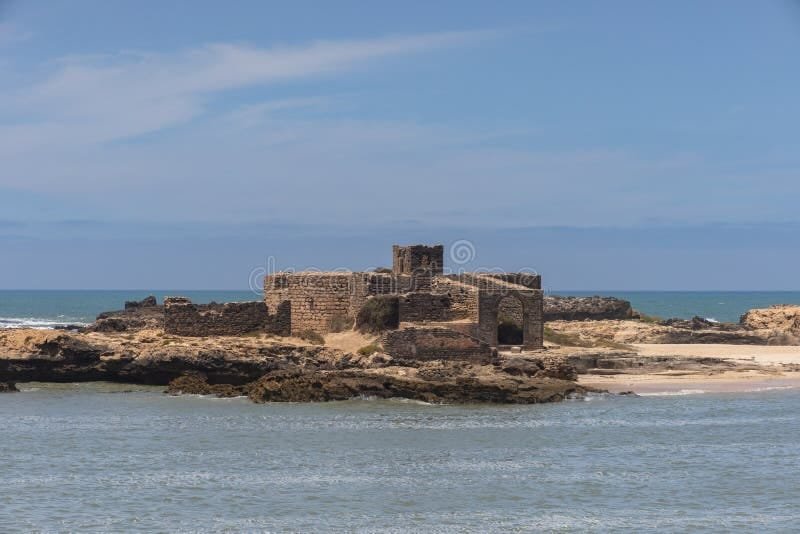
The recorded history of Morocco truly begins with the arrival of the Phoenicians, a seafaring civilization from the Eastern Mediterranean. Between the 8th and 6th centuries BCE, the Phoenicians established trading posts along the Moroccan coast, drawn by its strategic location and abundant resources [1]. These early settlements, such as Lixus, Chellah, and Mogador (Essaouira), served as vital links in their extensive trade networks, facilitating the exchange of goods and ideas between the Mediterranean world and the African interior. The Phoenicians introduced new technologies, agricultural practices, and cultural elements that began to shape the nascent societies of the region.
Roman Rule and the Province of Mauretania Tingitana
Following the decline of Phoenician influence and the rise of Carthage, a powerful Phoenician colony, much of coastal Morocco fell under Carthaginian control. This period saw further integration into the Mediterranean economic sphere. However, the eventual defeat of Carthage by the Roman Republic in the Punic Wars paved the way for Roman expansion into North Africa.
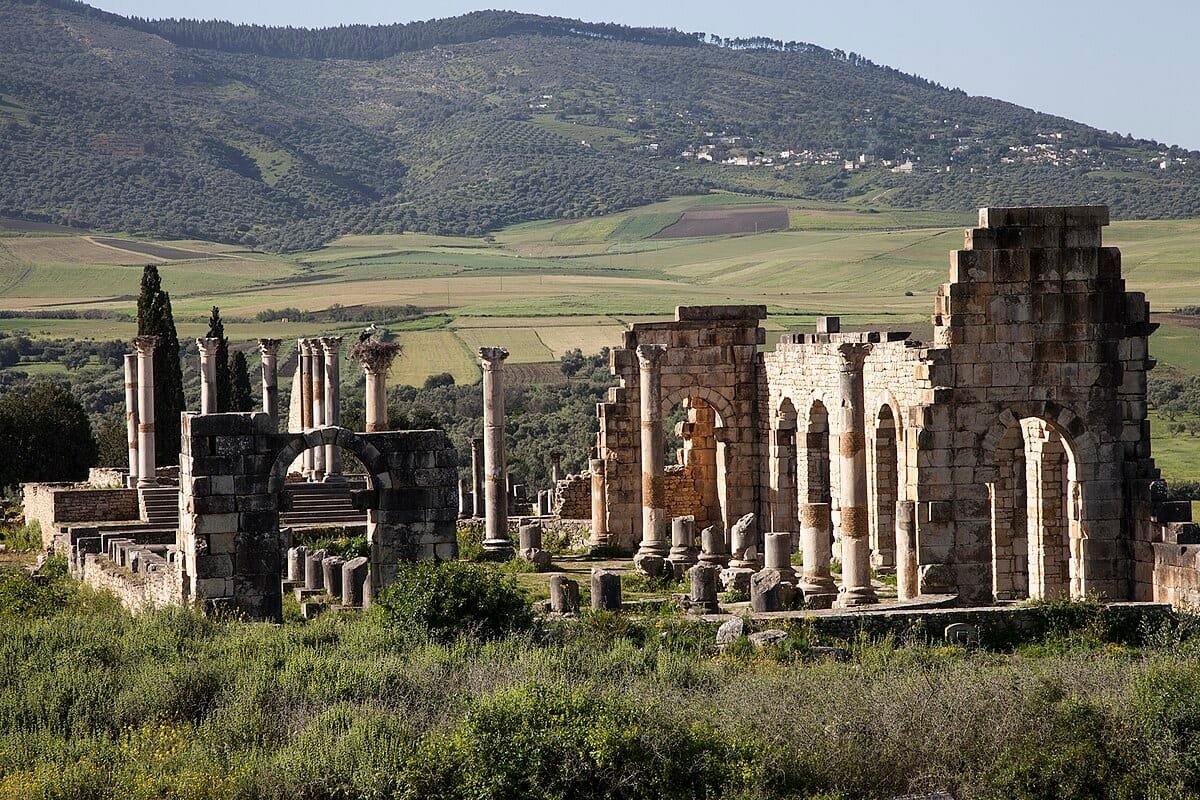
By 40 CE, the Roman Empire formally annexed the region, establishing the province of Mauretania Tingitana [2]. Roman rule brought significant changes, including the development of urban centers like Volubilis, a UNESCO World Heritage site that stands today as a testament to Roman architectural and administrative prowess. The Romans introduced their legal systems, infrastructure, and agricultural techniques, particularly the cultivation of olives and grains. While Roman influence was primarily concentrated in the northern coastal plains and fertile valleys, the indigenous Berber tribes often maintained a degree of autonomy in the mountainous and desert regions. Roman control lasted for several centuries, leaving behind a legacy of impressive ruins and contributing to the diverse cultural tapestry of Morocco.
The Idrisid Dynasty: Birth of the Moroccan State
The arrival of Islam in the 7th century marked a profound turning point in Moroccan history. The Arab conquest brought a new religion, language, and political structure to the region. However, it was with the establishment of the Idrisid dynasty in 788 CE that the first independent Moroccan state was truly born [1, 7]. Founded by Idris I, a descendant of the Prophet Muhammad, the Idrisids established Fes as their capital, which quickly grew into a major center of Islamic learning and culture. The Idrisids laid the foundations for a distinct Moroccan identity, separate from the eastern Caliphates, and their rule is often considered the genesis of modern Morocco [10].
The Almoravid and Almohad Empires: Unifying the Maghreb and Al-Andalus
Following the decline of the Idrisids, Morocco experienced a period of fragmentation. However, the 11th and 12th centuries witnessed the rise of two powerful Berber empires that would profoundly shape the political and cultural landscape of the Maghreb and beyond: the Almoravids and the Almohads.
The Almoravid dynasty (1040–1147 CE) emerged from the Sanhaja Berber tribes of the Sahara. Driven by religious zeal, they established a vast empire that stretched across present-day Morocco, Western Sahara, Mauritania, and parts of Algeria, and extended into Al-Andalus (Islamic Spain) [4, 12]. They founded Marrakech, which became their capital and a thriving imperial city. The Almoravids were instrumental in spreading Maliki Islam and fostering a period of significant architectural and intellectual development.
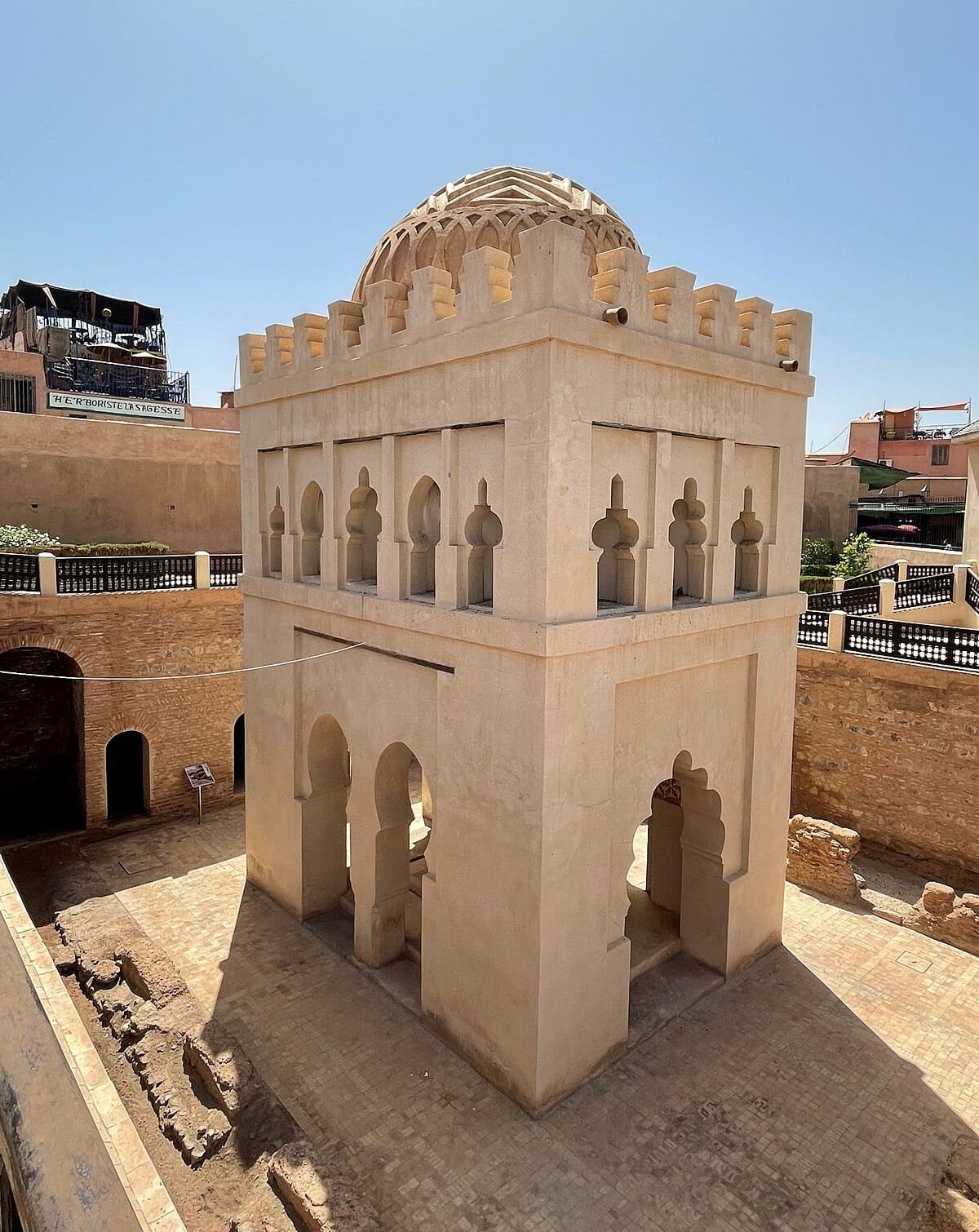
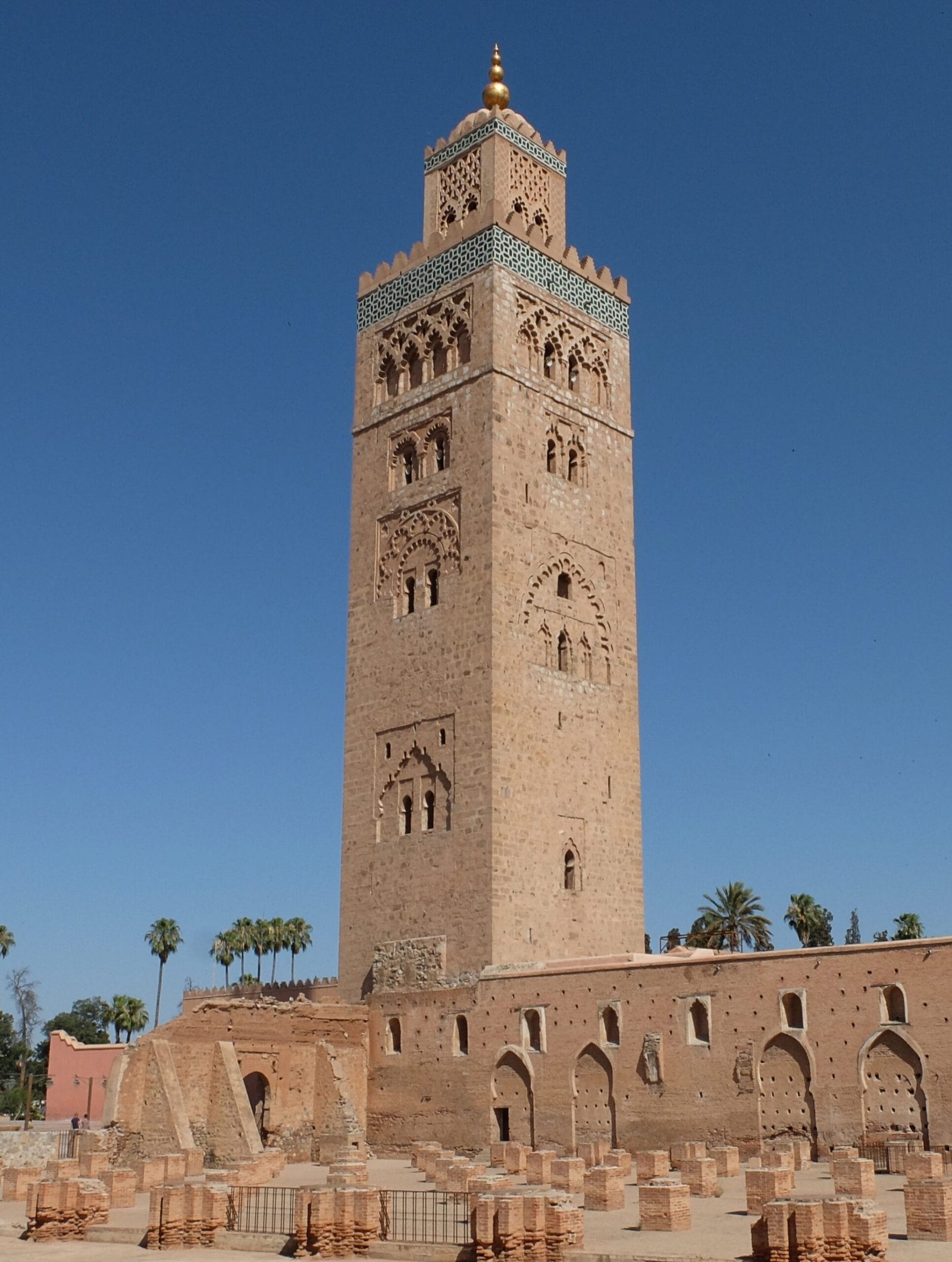
The Almohad dynasty (1121–1269 CE) succeeded the Almoravids, originating from the Masmuda Berber tribes of the Atlas Mountains. The Almohads, even more puritanical in their religious outlook, overthrew the Almoravids and expanded their empire to encompass much of North Africa and the Iberian Peninsula [14]. Their rule marked a golden age of art, science, and philosophy, with magnificent architectural achievements such as the Koutoubia Mosque in Marrakech and the Giralda in Seville. The Almohads unified a vast territory under a single, powerful state, leaving a lasting legacy on the region’s cultural and religious identity.
The Marinid, Wattasid, and Saadian Dynasties: Periods of Transition and Revival
The fall of the Almohad Empire in the mid-13th century led to the rise of new dynasties. The Marinid dynasty (1195–1465 CE), another Berber group, took control of Morocco and continued many of the Almohad traditions, particularly in architecture and scholarship [15]. They faced challenges from internal rebellions and external pressures, including the Reconquista in Spain. The Marinids were succeeded by the short-lived Wattasid dynasty (1472–1554 CE).
The Saadian dynasty (1549–1659 CE), originating from the Draa Valley, rose to prominence in the 16th century. They successfully repelled Portuguese incursions and famously defeated the Portuguese in the Battle of the Three Kings in 1578, securing Morocco’s independence and prestige. Under rulers like Ahmad al-Mansur, the Saadians oversaw a period of renewed prosperity, engaging in trans-Saharan trade and constructing impressive palaces like the El Badi Palace in Marrakech. Their reign marked a significant period of Moroccan power and influence.
The Alaouite Dynasty: Unifying Morocco and Facing European Pressures
The current ruling dynasty of Morocco, the Alaouite dynasty, rose to power in the mid-17th century. Descendants of the Prophet Muhammad, they consolidated power and unified Morocco after a period of instability. Under sultans like Moulay Ismail, the Alaouites established a strong central government, built new cities, and engaged in diplomatic relations with European powers. They successfully defended Morocco’s sovereignty against various external threats, though European influence began to steadily increase throughout the 19th century.
European powers, particularly France and Spain, began to exert significant economic and political pressure on Morocco in the 19th century. Strategic interests, trade routes, and colonial ambitions fueled their involvement. This culminated in the signing of the Treaty of Fez in 1912, which formally established the French Protectorate in Morocco [6, 7]. A northern strip of the country, along with parts of the south, became the Spanish Protectorate [11, 12].
Under the protectorate, Morocco was divided into zones of influence, with France administering the larger central part and Spain controlling the northern and southern regions. While the Sultan remained the nominal head of state, real power lay with the French and Spanish resident-generals. This period saw significant infrastructure development, including roads, railways, and ports, but also the exploitation of Moroccan resources and the imposition of foreign administrative systems. The protectorate era, despite its modernizing aspects, was marked by a suppression of Moroccan sovereignty and a growing nationalist sentiment.
The Struggle for Independence
The desire for independence grew steadily throughout the protectorate period. Moroccan nationalists, led by figures like Sultan Mohammed V, advocated for an end to colonial rule. The Sultan became a symbol of national resistance, and his exile by the French in 1953 further fueled the independence movement. Widespread protests and armed resistance eventually forced France to negotiate.
On March 2, 1956, Morocco officially regained its independence from France, and shortly after, the Spanish protectorate was also dissolved [15, 16]. Sultan Mohammed V returned to a hero’s welcome and became King Mohammed V, ushering in a new era for the Kingdom of Morocco.
Post-Independence and the Reign of Hassan II
Following independence, Morocco embarked on a path of nation-building and modernization. King Mohammed V played a crucial role in establishing the foundations of the new state. Upon his death in 1961, his son, Hassan II, ascended to the throne. King Hassan II ruled for nearly four decades, a period marked by significant political and economic developments. He navigated complex regional and international relations, implemented various economic reforms, and faced internal challenges. His reign saw the consolidation of the monarchy’s power and Morocco’s emergence as a key player in regional diplomacy.
Morocco Today: The Reign of Mohammed VI
In 1999, King Mohammed VI succeeded his father, King Hassan II. His reign has been characterized by a continued commitment to economic development, social progress, and political reforms. King Mohammed VI has overseen initiatives aimed at improving human rights, promoting regionalization, and fostering a more open and democratic society. Morocco has also focused on developing its infrastructure, diversifying its economy, and strengthening its position as a bridge between Africa, Europe, and the Middle East. Today, Morocco stands as a stable and modernizing nation, proud of its rich history and looking towards a prosperous future.
References
[1] History of Morocco – Wikipedia. URL: https://en.wikipedia.org/wiki/History_of_Morocco [2] Morocco | History, Map, Flag, Capital, People, & Facts | Britannica. URL: https://www.britannica.com/place/Morocco [4] Almoravid Empire | EBSCO Research Starters. URL: https://www.ebsco.com/research-starters/history/almoravid-empire [6] Morocco – Wikipedia. URL: https://en.wikipedia.org/wiki/Morocco [7] Idrisid dynasty – Wikipedia. URL: https://en.wikipedia.org/wiki/Idrisid_dynasty [8] History and Information of Ancient Morocco. URL: https://www.morocco.com/culture/ancient-morocco/ [10] History: The Idrisid Dynasty | Morocco.com. URL: https://www.morocco.com/blog/history-the-idrisid-dynasty/ [11] Spanish protectorate in Morocco – Wikipedia. URL: https://en.wikipedia.org/wiki/Spanish_protectorate_in_Morocco [12] The Spanish Protectorate in Morocco (1912-1956). URL: https://moroccanjews.org/home/jews-in-moroccan-history/the-spanish-protectorate-of-morocco-1912-1956/ [14] Almohad Caliphate – Wikipedia. URL: https://en.wikipedia.org/wiki/Almohad_Caliphate [15] Independence for Morocco and Tunisia – Decolonisation. URL: https://www.cvce.eu/en/education/unit-content/-/unit/dd10d6bf-e14d-40b5-9ee6-37f978c87a01/2796f581-3e5a-4dff-9fbe-fd3d48966b38 [16] Morocco Independence Day – Diversity Atlas. URL: https://diversityatlas.io/events/morocco-independence-day/
Conclusion: Morocco’s Enduring Spirit
Morocco’s history is a compelling narrative of continuity and change, marked by the ebb and flow of empires, the fusion of diverse cultures, and an unwavering spirit of independence. From its ancient roots as a crossroads of civilizations to its modern-day role as a dynamic African nation, Morocco has consistently demonstrated its ability to adapt, innovate, and preserve its unique identity. The legacy of its Berber heritage, the profound influence of Islam, and the complex interplay with European powers have all contributed to a rich tapestry that defines Morocco today. As a vibrant and forward-looking country, Morocco continues to draw on its deep historical foundations while embracing the challenges and opportunities of the 21st century, offering a captivating journey for all who seek to explore its enduring legacy.