The Tangier JournalWritten by licensed guides
History · From Tingis to today
History of Morocco: From the First Humans to Today
Morocco's history in ten chapters, from the oldest known Homo sapiens to the great Moroccan empires, the protectorates and independence in 1956, with the places where you can still see each one and Tangier's part in the story.
In this article 14 sections
In short
The history of Morocco at a glance
Morocco's history runs from some of the oldest human remains ever found to a kingdom ruled by the same dynasty since the 17th century. Amazigh (Berber) peoples were joined by Phoenician traders, Roman rule and, from the 7th century, Islam. The Idrisids founded the first Moroccan state in 789; the Almoravids and Almohads built empires reaching into Spain; France and Spain ruled as protectors from 1912, and Morocco regained its independence in 1956.
- 01The first peopleFrom about 300,000 years ago
- 02Phoenicians and Carthage8th to 2nd century BCE
- 03Roman Mauretania Tingitana40 CE to the 5th century
- 04Islam and the Idrisids7th century; Idrisids 789 to 974
- 05The Moroccan empires1040 to 1269
- 06Marinids, Wattasids, SaadiansAbout 1244 to 1659
- 07The AlaouitesFrom 1666 to today
- 08Protectorates and the International Zone1912 to 1956
- 09Independence2 March 1956
- 10Modern Morocco1956 to today
Tangier has been part of every chapter: a Phoenician port, the Roman capital of the region, Portuguese and English for two centuries, an international city until 1956.
Morocco sits where Africa meets Europe, with coasts on both the Atlantic and the Mediterranean, and that position has shaped its history. Phoenicians, Romans, Arabs and European powers all came, while the Amazigh people who were here first remained the bedrock of the country.
Here is that history in ten chapters, with the dates that matter, the dynasties that built the country and the places where each period can still be seen, starting with the city our guides know best.
Prehistory and the Amazigh
1. The first people of Morocco
Morocco's history begins long before writing. At Jebel Irhoud, archaeologists found remains of Homo sapiens about 300,000 years old, among the oldest known anywhere in the world.
The Amazigh, or Berbers, have lived across North Africa for thousands of years, in tribal societies from the coast to the Atlas and the Sahara. Their language, their crafts and their customs are still the foundation of Moroccan identity.
- When
- From about 300,000 years ago
- See it in Tangier
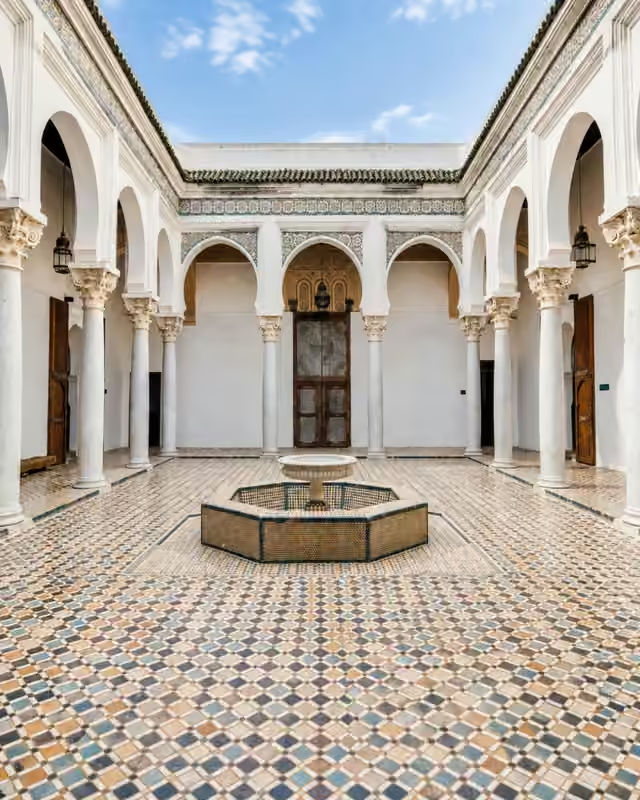
- The first rooms of the Kasbah Museum
Traders from the sea
2. Phoenicians and Carthage
Recorded history begins with the Phoenicians, seafaring traders from the eastern Mediterranean. Between the 8th and 6th centuries BCE they set up trading posts along the Moroccan coast, at Lixus, Chellah and Mogador among others, linking the Mediterranean with the African interior.
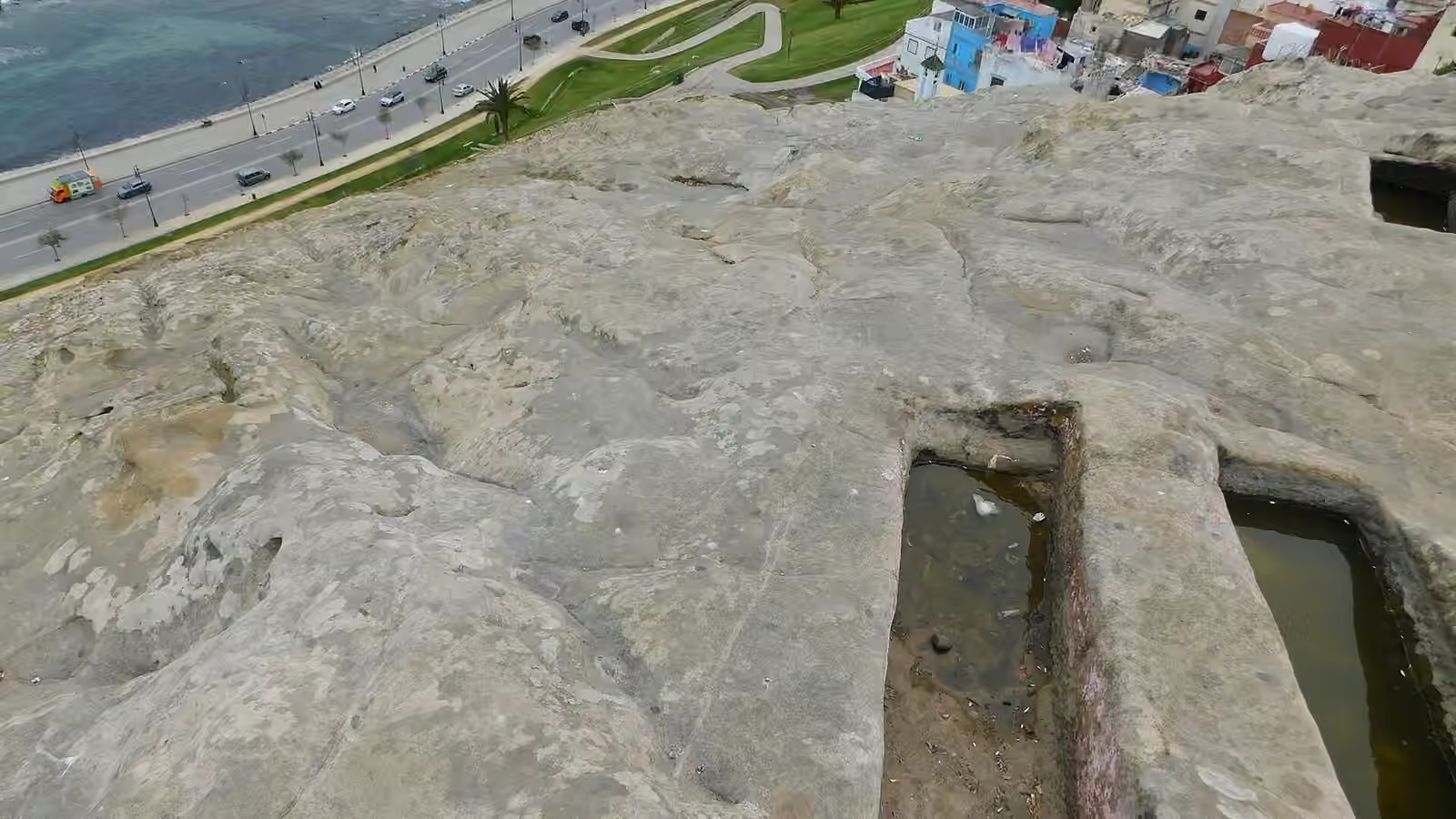
Carthage, the greatest Phoenician colony, later controlled much of the coast, until Rome defeated it in the Punic Wars. Tangier, then called Tingis, grew into a port in this period, and the rock-cut tombs above its bay are still known as the Phoenician tombs.
- When
- 8th to 2nd century BCE
- See it in Tangier
- The Phoenician tombs, next to Café Hafa
A Roman province
3. Roman rule: Mauretania Tingitana
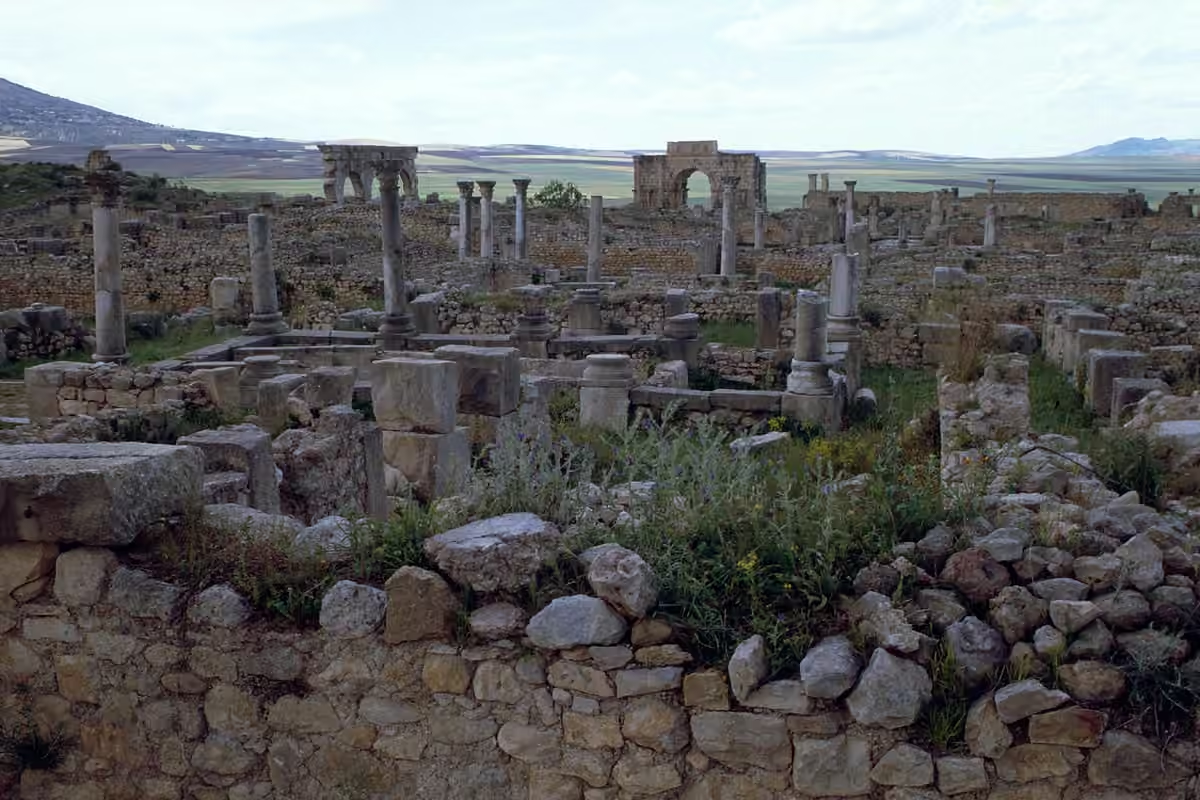
Rome annexed the region in 40 CE and made it the province of Mauretania Tingitana, named after its capital, Tingis: today's Tangier. Roman towns grew, above all Volubilis, now a UNESCO World Heritage site, with its mosaics, forum and triumphal arch.
Rome brought its law, its roads and its farming, olives and grain above all. Roman power was strongest on the northern plains and the coast, while the Amazigh tribes of the mountains and the desert kept much of their independence.
- When
- 40 CE to the 5th century
- See it in Tangier
- Roman bronzes and a mosaic of Venus in the Kasbah Museum
The first Moroccan state
4. Islam and the Idrisid dynasty
The arrival of Islam in the 7th century was a turning point, bringing a new religion, the Arabic language and new forms of government. In 789, Idris I, a descendant of the Prophet Muhammad, founded the Idrisid dynasty, and with it the first independent Moroccan state.
The Idrisids founded Fes, which grew into a great centre of Islamic learning; its Qarawiyyin, founded in 859, is often called the oldest university in the world still teaching. Their rule is seen as the beginning of a Moroccan identity separate from the caliphates of the East.
- When
- 7th century; Idrisids 789 to 974
- See it
- The medina of Fes, a UNESCO World Heritage site
Almoravids and Almohads
5. The Moroccan empires of the Almoravids and Almohads
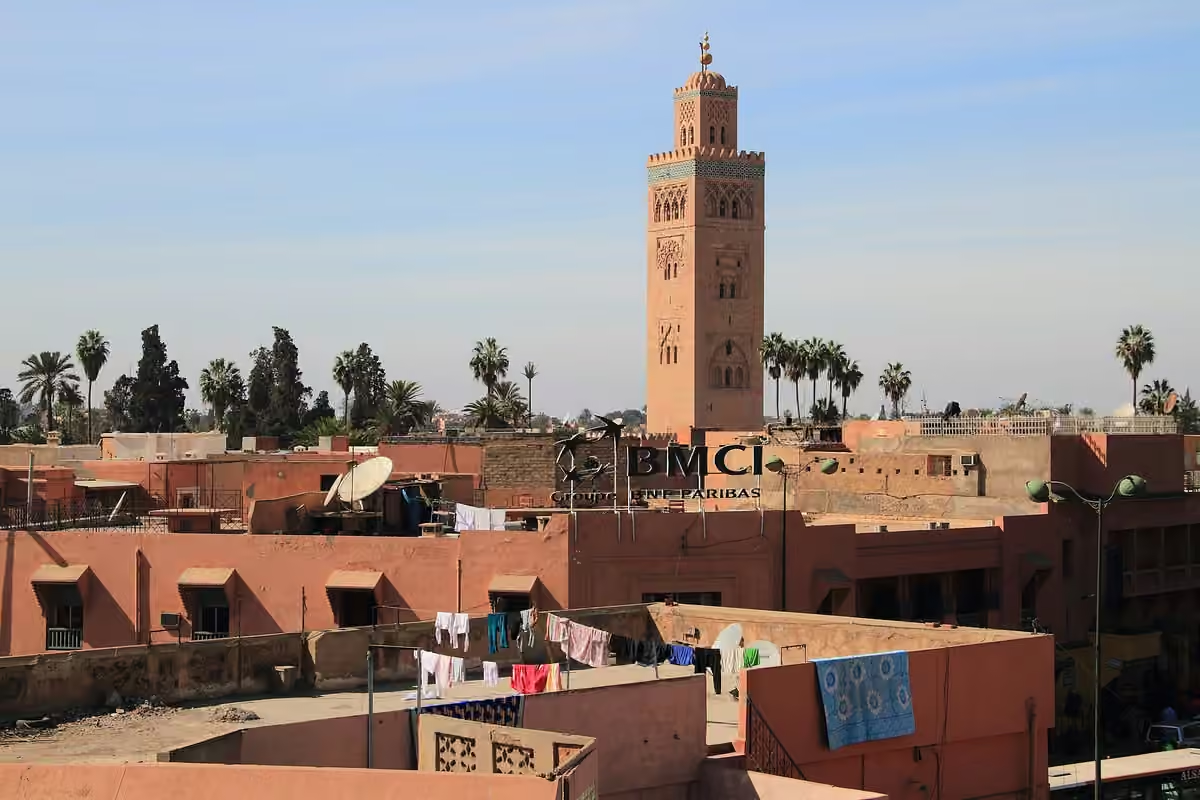
In the 11th and 12th centuries, two Amazigh (Berber) dynasties built the great Moroccan empires. The Almoravids (1040 to 1147), from the Sanhaja tribes of the Sahara, ruled from the Senegal river to al-Andalus in Spain and founded Marrakech as their capital.
The Almohads (1121 to 1269), from the Masmuda tribes of the Atlas, overthrew them and ruled most of North Africa and Muslim Spain. Their reign was a golden age of art, science and philosophy, and their minarets still stand: the Koutoubia in Marrakech, the Hassan Tower in Rabat and the Giralda in Seville.
- When
- 1040 to 1269
- See it
- The Koutoubia in Marrakech, the Hassan Tower in Rabat
Scholars and sultans
6. The Marinid, Wattasid and Saadian dynasties
The Marinids, another Berber dynasty, ruled Morocco from about 1244 to 1465 and filled Fes with madrasas. The great traveller Ibn Battuta was born in Tangier in 1304, under their rule, and journeyed as far as China. They were followed by the short-lived Wattasids (1472 to 1554), while Portugal took ports along the coast, Tangier among them in 1471.
The Saadians, from the Draa Valley, drove back the Portuguese and won the Battle of the Three Kings in 1578. Under Ahmad al-Mansur, Morocco grew rich on trans-Saharan trade and built the El Badi Palace in Marrakech.
- When
- About 1244 to 1659
- See it in Tangier
- The tomb said to be Ibn Battuta's, in the medina
The dynasty that still reigns
7. The Alaouite dynasty and Tangier's European centuries
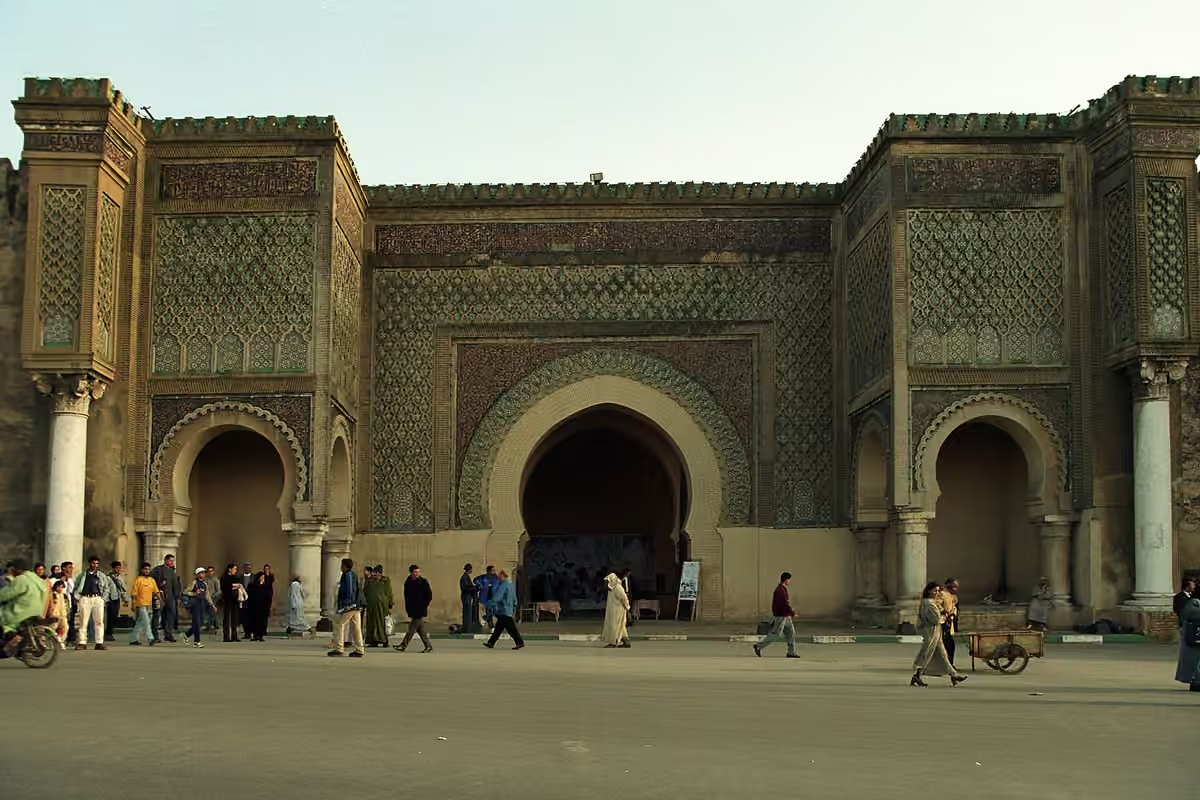
The Alaouite dynasty, which still reigns today, took power in the mid-17th century and reunited the country. Sultan Moulay Ismail (1672 to 1727) built a strong central state with Meknes as his capital, and in 1684 his army took Tangier back from England, which had received the city in 1661 as part of Catherine of Braganza's dowry.
In 1777 Morocco became one of the first countries to recognise the United States, and in 1821 the Sultan gave the Americans a building in Tangier, now the American Legation Museum. Through the 19th century Tangier was Morocco's diplomatic capital, home to the foreign legations, as European pressure on the country grew.
- When
- From 1666 to today
- See it in Tangier
- The American Legation Museum and the Kasbah's sultan's palace
1912 to 1956
8. The French and Spanish protectorates, and Tangier's International Zone
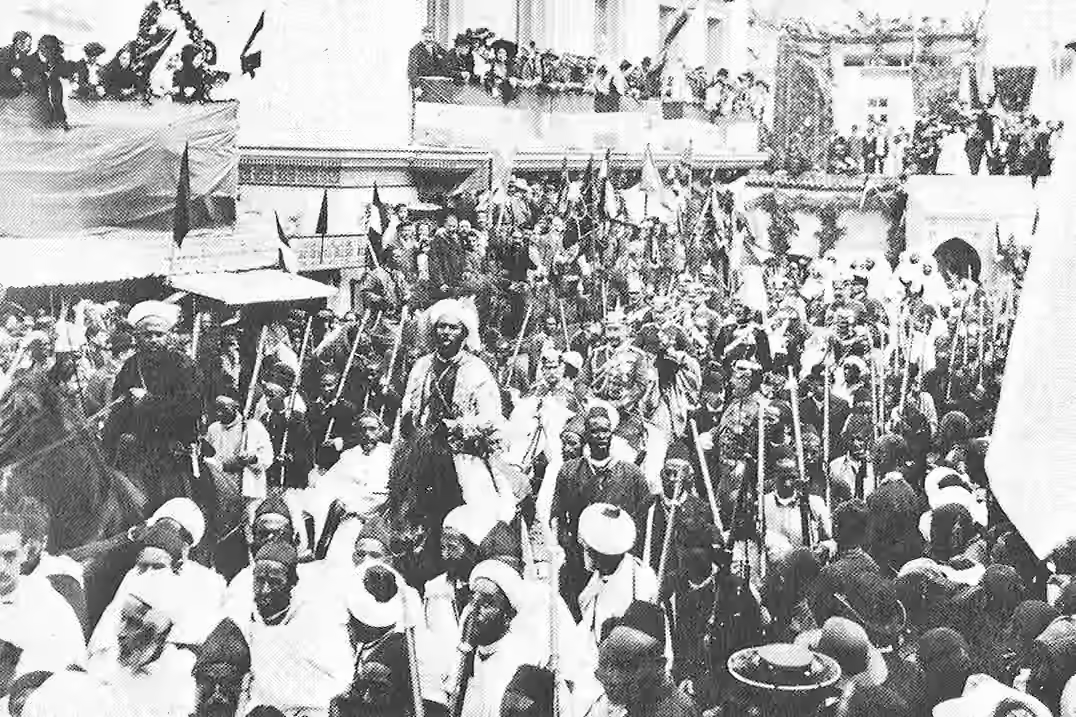
In 1905 Kaiser Wilhelm II landed in Tangier to challenge France's plans for Morocco, a crisis settled at the Algeciras conference of 1906. In 1912 the Treaty of Fez made most of Morocco a French protectorate, while Spain took a zone in the north and in the south. The sultan remained head of state, but real control lay with the French and Spanish resident-generals, and French settlers, schools and banks followed.
Tangier was set apart. Under a statute of 1923, it became the Tangier International Zone, run by several foreign powers from 1925 to 1956, apart from a Spanish occupation during the Second World War. It became a city of banks, spies, writers and artists, and on 9 April 1947 Sultan Mohammed V gave a speech in Tangier calling for Morocco's unity and independence.
- When
- 1912 to 1956
- See it in Tangier
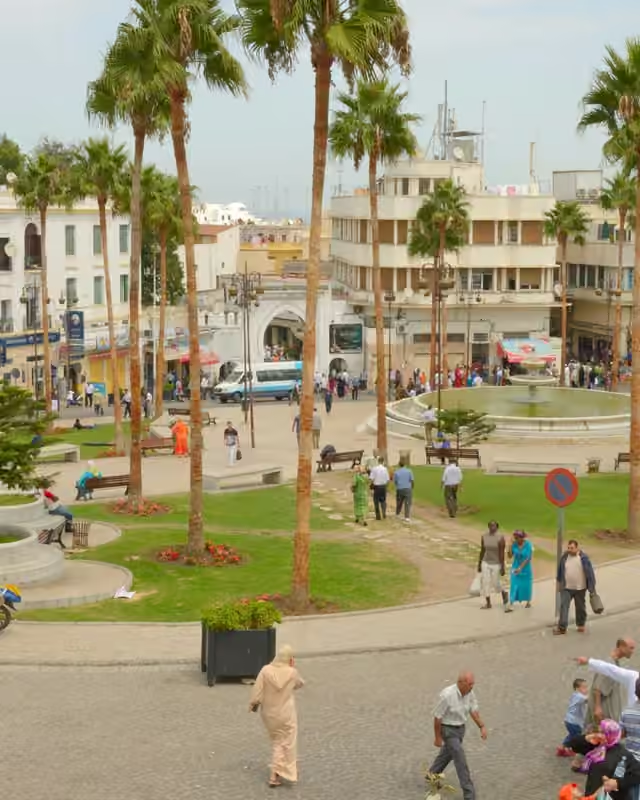
- The Grand Socco, officially Place du 9 Avril 1947
1956
9. The struggle for independence
Nationalism grew throughout the protectorate years, and Sultan Mohammed V became its symbol. When France sent him into exile in 1953, protests and armed resistance spread, and the French government was forced to negotiate.
Morocco regained its independence from France on 2 March 1956, and Spain gave up its northern zone on 7 April 1956. Tangier rejoined Morocco in October 1956. Mohammed V returned to a hero's welcome and took the title of king in 1957.
- When
- 2 March 1956
- Remember
- Independence Day is celebrated on 18 November
Hassan II and Mohammed VI
10. Modern Morocco: the kingdom today

Hassan II succeeded his father in 1961 and reigned for nearly four decades, building the new state and leading the Green March of 1975. His son, Mohammed VI, came to the throne in 1999 and has overseen reforms, a new constitution in 2011 and large investments in the kingdom's infrastructure.
Tangier has changed with it. Tanger Med, opened in 2007 east of the city, has become one of the largest ports in the Mediterranean, and since 2018 the Al Boraq high-speed train has linked Tangier with Rabat and Casablanca.
- When
- 1956 to today
- See it in Tangier
- The new marina, Tanger Ville station and the port
At a glance
The dynasties of Morocco in dates
789 to 974
Idrisids
The first Moroccan state, founded by Idris I; Fes is their city.
1040 to 1147
Almoravids
Saharan Amazigh; founders of Marrakech, rulers from Senegal to Spain.
1121 to 1269
Almohads
Atlas Amazigh; builders of the Koutoubia, the Hassan Tower and the Giralda.
About 1244 to 1465
Marinids
Scholars' dynasty of the madrasas of Fes; Ibn Battuta's time.
1472 to 1554
Wattasids
A short dynasty, while Portugal held the coast.
1549 to 1659
Saadians
Victors of 1578; the El Badi Palace and the Saadian Tombs.
1666 to today
Alaouites
Moulay Ismail, Mohammed V, Hassan II and King Mohammed VI.
See it for yourself
A walk through Morocco's history in Tangier
Two thousand years of history in one morning, the way our guides walk it.
- 9:30
The Phoenician tombs
Rock-cut graves above the Strait, next to Café Hafa.
- 10:15
The Kasbah Museum
Prehistory, Roman Tingis and the sultan's palace of Dar el Makhzen.
- 11:30
The American Legation
The 1821 gift of the Sultan and the story of Morocco and the United States.
- 12:30
The Grand Socco
Place du 9 Avril 1947, where the medina meets the new town of the International Zone.
Or let a guide tell the story
 Tangier Private Walking Tour2–3 hrs · stopovers & couples · from $25
 Tangier Full Day Tour6–7 hrs · first-time visitors · from $65
Our guides are licensed by the Ministry of Tourism, and history is what they are trained in.
Good to know
Morocco history: your questions
When did Morocco gain independence?
Morocco regained its independence from France on 2 March 1956. Spain gave up its northern zone on 7 April 1956, and Tangier, an international city since 1925, rejoined Morocco in October 1956.
Who colonized Morocco?
France and Spain ruled most of Morocco as protectorates from the Treaty of Fez in 1912 to 1956, with Tangier run as an international zone. Before that, Portugal and Spain held ports on the coast, and England held Tangier from 1661 to 1684.
What was the Moroccan empire?
The name usually refers to the Almoravid and Almohad empires of the 11th to 13th centuries, Amazigh dynasties that ruled from Marrakech over North Africa and Muslim Spain. Morocco itself was long called the Sharifian Empire.
Who rules Morocco today?
King Mohammed VI, since 1999, of the Alaouite dynasty, which has reigned since the 17th century. Morocco is a constitutional monarchy, with a new constitution adopted in 2011.
Why was Tangier an international zone?
Because of its position on the Strait of Gibraltar, European powers agreed in 1923 to run Tangier together. The International Zone lasted from 1925 to 1956, apart from a Spanish occupation during the Second World War.
What was the first Moroccan dynasty?
The Idrisids, founded by Idris I in 789, are seen as the first Moroccan state. They founded Fes, which became the country's first great capital.
More from the journal
Keep reading
Ready when you are
Walk through history with a licensed guide
Tell us your dates and the periods that interest you most. A licensed guide replies within 12 hours with a plan and an exact price, and there is nothing to pay until the day.
- No deposit
- Free cancellation 48h before
- Reply within 12 hours
Photos via Wikimedia Commons: the Phoenician tombs (Ideophagous, CC BY-SA 4.0), Volubilis (Christian Wittmann, CC0), the Koutoubia (Schorle, CC BY-SA 4.0), Bab Mansour (Jerzy Strzelecki, CC BY 3.0), Tangier in 1905 (unknown author, public domain) and Al Boraq (NicholasNCE, CC BY-SA 4.0); the Kasbah Museum and the Grand Socco by Tour Guide Tangier.