The Tangier JournalWritten by licensed guides
Plan your trip · Practical tips from Tangier
Morocco Travel Guide: What to Know Before Your Trip
A practical Morocco travel guide from licensed guides who welcome travellers every day: where and when to go, how to get there and around, money, where to stay, food, customs and safety, with the tips we give our own guests.
In this article 15 sections
In short
Morocco travel guide: the essentials
Morocco is easy to travel with a little preparation. Visitors from the UK, the US, Canada, Australia and the EU need no visa for up to 90 days. The currency is the dirham, and you will need cash for the souks. Trains link the big cities, and a car with a driver is the best way to see the mountains and the desert. Wear what you would wear in a European city, bargain with a smile, drink bottled water, and take a licensed guide in the big medinas.
- 01Where to goCities, mountains, desert, coast
- 02When to goSpring and autumn
- 03Getting thereFly, or take the ferry from Spain
- 04Visas and entryNo visa for many, up to 90 days
- 05Money and costsDirhams, and cash for the souks
- 06Getting aroundTrain, bus, or a car with a driver
- 07Where to stayRiads, kasbahs, desert camps
- 08Food and drinkTagine, mint tea, bottled water
- 09Culture and etiquetteRight hand, ask before photos
- 10Phones and plugsLocal SIM, European plugs
- 11Safety and healthSafe, with common sense
The chapters below go through each topic, with the tips we give our own guests.
Tourism in Morocco has never been bigger: the country welcomed a record of more than 17 million visitors in 2024, drawn by its imperial cities, the Atlas Mountains, the Sahara desert and two coasts. For a first-time visitor it can still feel like a different world, with its own currency, languages, customs and rhythm, and a few things are worth knowing before you land.
We are licensed guides in Tangier, where many travellers arrive by ferry from Spain or by cruise ship, and we plan trips across the whole country. This Morocco travel guide covers the practical side, chapter by chapter, from visas and money to trains, riads, food and etiquette.
Cities, mountains, desert, coast
1. Where to go in Morocco: the highlights
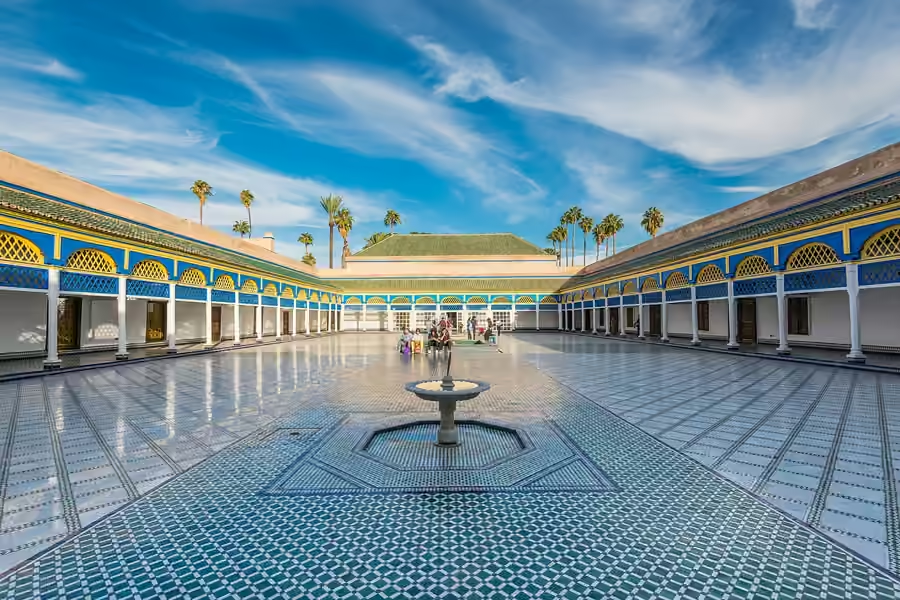
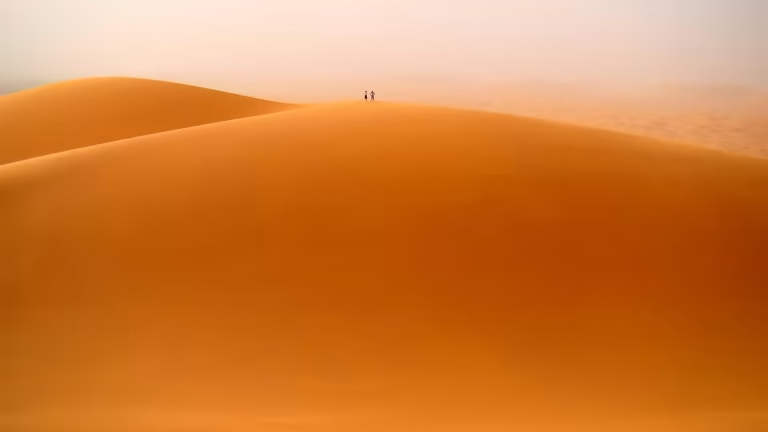
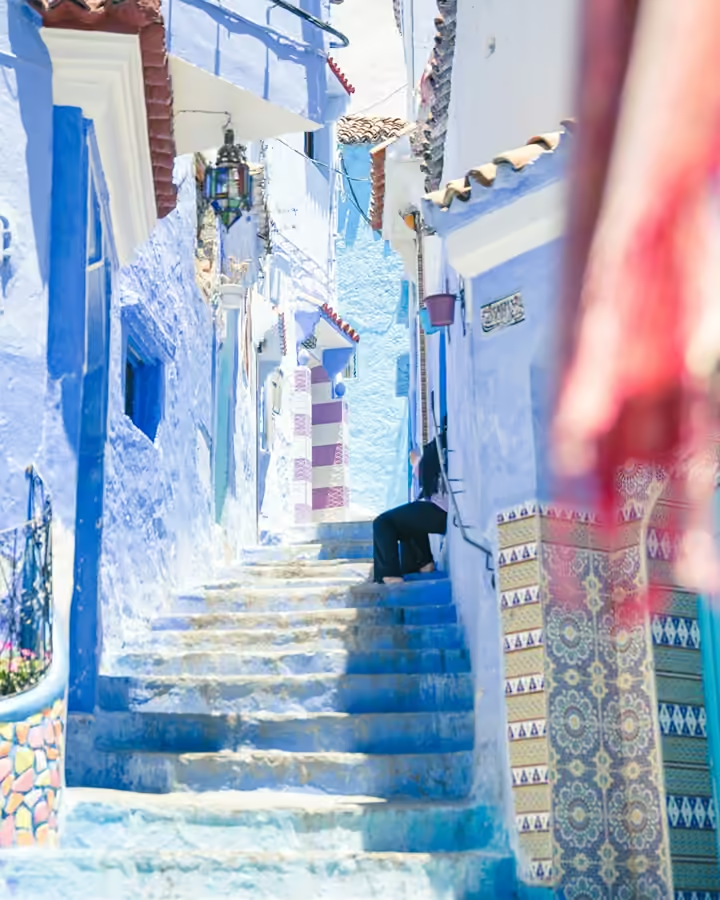
Morocco has four great kinds of places, and most good trips mix them, depending on what you want to see and how much time you have. The imperial cities, Fes, Meknes, Rabat and Marrakech, have the great medinas, palaces and madrasas. The north, Tangier, Chefchaouen, Tetouan and Asilah, is the easiest start from Europe. The High Atlas and the Rif are for hiking and village life, and the Sahara at Merzouga is for the dunes and a night in a desert camp.
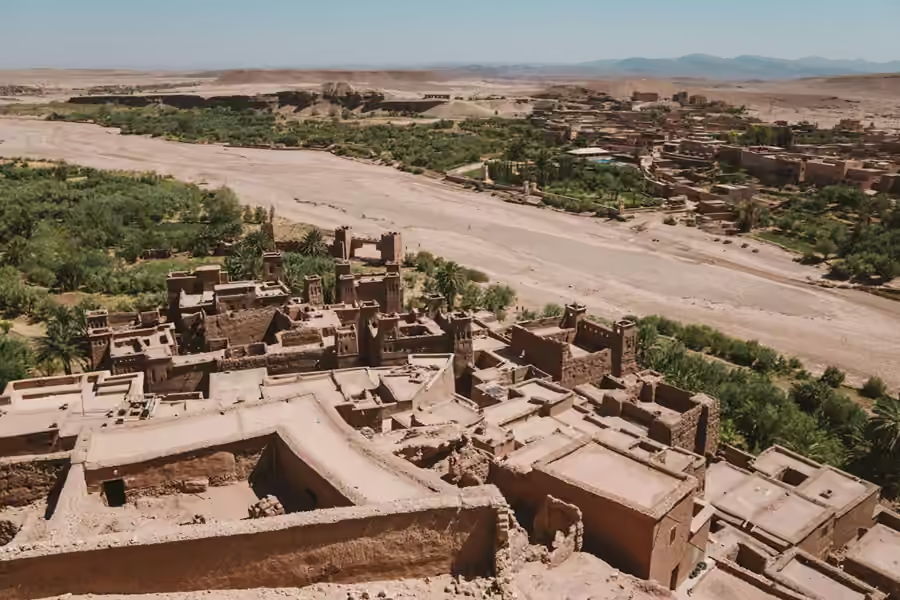
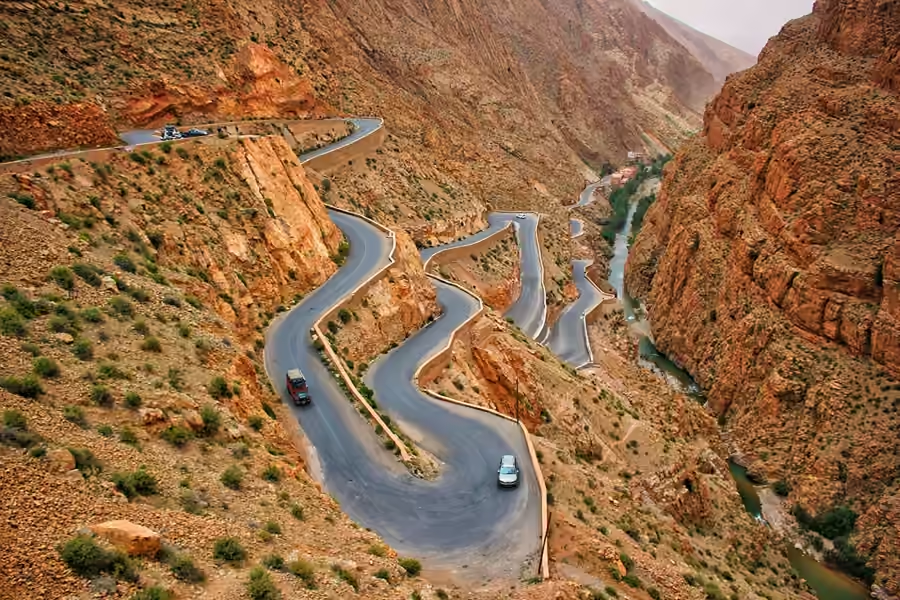
Along the coast, Essaouira, Asilah and the Atlantic beaches are the places to slow down. On the way south, the kasbahs of Ait Ben Haddou and Ouarzazate and the Todra and Dades gorges are some of the most beautiful places in the country.
- In short
- Cities, mountains, desert, coast
- Our tip
- Choose one or two regions for a week; the country is big
Seasons and weather
2. When to go to Morocco
Spring, from March to May, and autumn, from September to November, are the best times for a trip around the whole country: warm, dry days from the medinas to the Sahara. Summer is very hot inland but pleasant in the north and on the coast, and winter brings sunny days in the south, cold desert nights and snow on the Atlas.
Check the dates of Ramadan before you book. Sights stay open, but the pace changes, and many local cafés close during the day.
- In short
- Spring and autumn
- Our tip
- In July and August, spend your time in the north and on the coast
By air or by sea
3. How to get to Morocco by air or by sea
The main airports are Marrakech, Casablanca, Tangier, Fes, Agadir and Rabat, with direct flights from most of Europe and some from North America, the Middle East and Africa. Choose the airport closest to your route: fly into Tangier for the north, Fes for the imperial cities and Marrakech for the south, and out of another to save a long drive back.
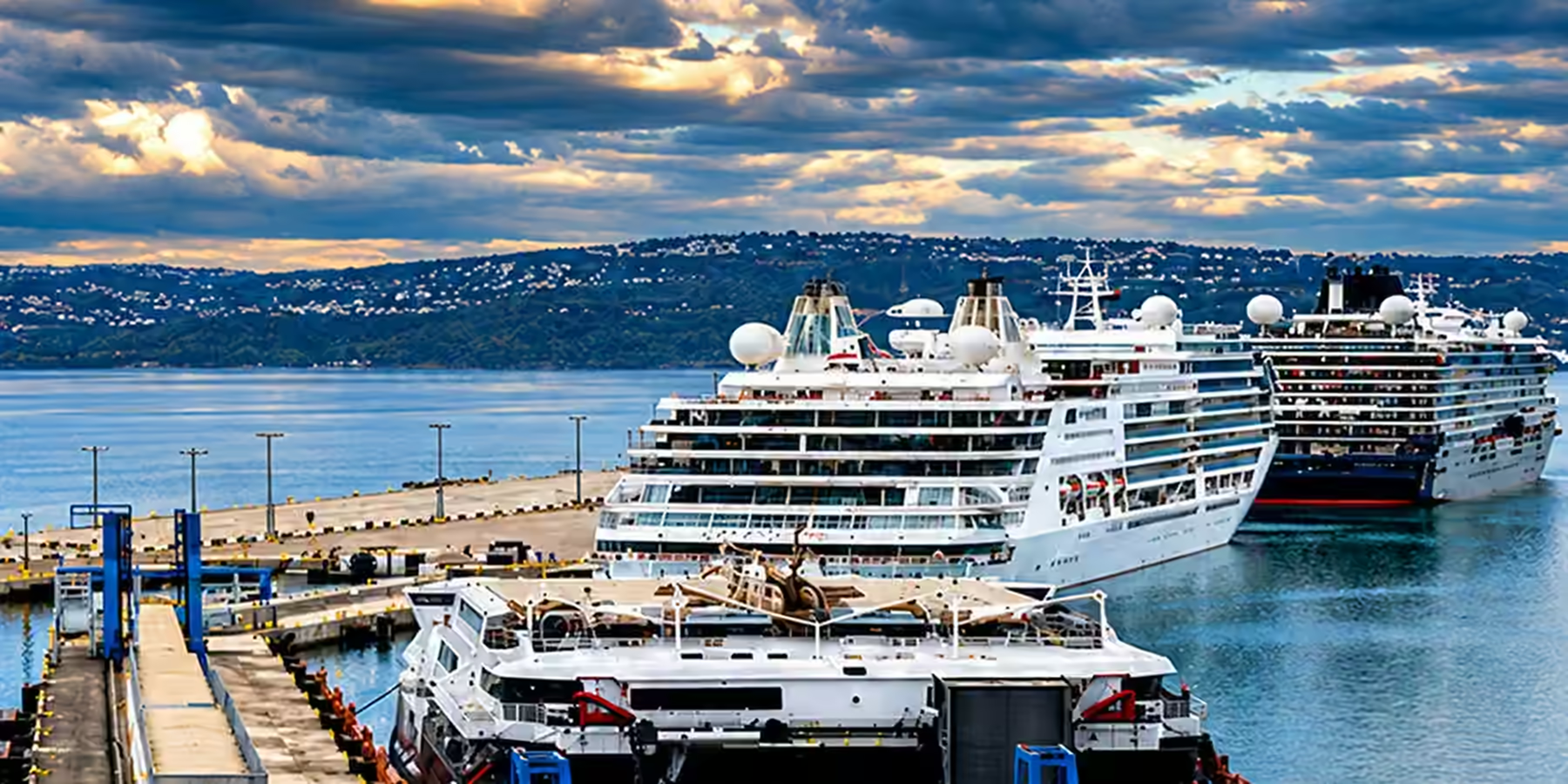
From Spain, the fast ferry from Tarifa reaches the port in the centre of Tangier in about an hour, and ferries from Algeciras sail to Tanger Med, east of the city. Many cruise ships also call in Tangier, so a first taste of Morocco can be a single day.
- In short
- Fly, or take the ferry from Spain
- Our tip
- From Tarifa, the ferry lands in the city centre, a short walk from the medina
Before you fly
4. Visas and entry requirements
Citizens of the UK, the US, Canada, Australia, the European Union and many other countries do not need a visa for a tourist stay of up to 90 days. Your passport is stamped when you arrive, at the airport or at the port.
Rules change, so check your government's travel advice for Morocco before you book, and make sure your passport is valid for the whole trip. Travel insurance is strongly recommended.
- In short
- No visa for many, up to 90 days
- Our tip
- Check your government's travel advice a few weeks before you go
Dirhams and cash
5. Money, costs and tipping in Morocco
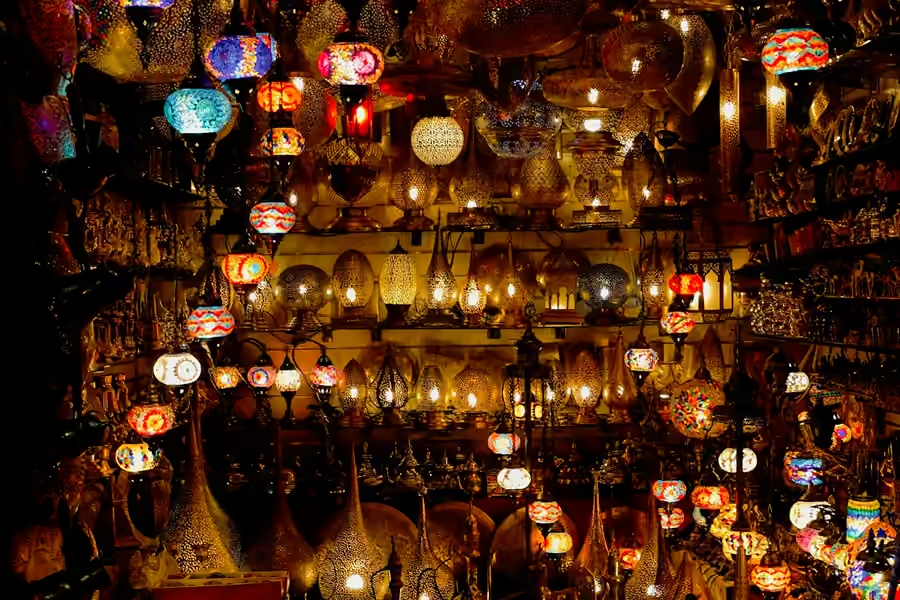
The Moroccan currency is the dirham (MAD). It is a closed currency, so you usually cannot buy it before you travel: take cash from a machine when you arrive (you will find them in every town) or change euros, dollars or pounds at an exchange office, where rates are fair. Cards are accepted in most hotels, larger restaurants and shops, but the souks, small cafés and taxis take cash only.
Day to day, Morocco is good value compared with much of Europe. Tipping is part of the culture: round up or leave about 10 percent in restaurants, and a few dirhams for porters and small services. Our own tours are paid in cash, by PayPal or by bank transfer, and private tours need no deposit.
- In short
- Dirhams, and cash for the souks
- Our tip
- Keep small notes and coins for taxis, tips and tea
Trains, buses and drivers
6. Getting around Morocco by train, bus and car
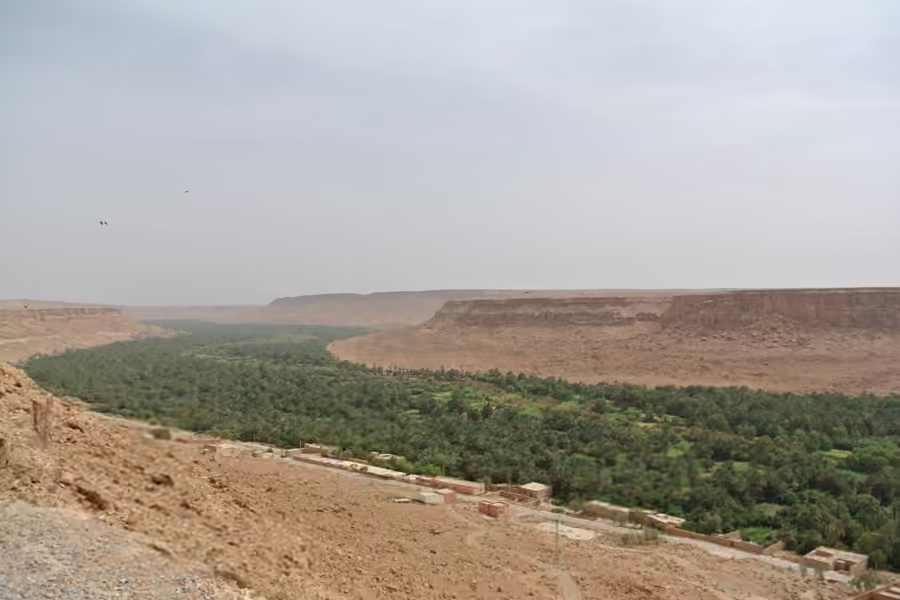
Trains are the easiest way between the big cities. The Al Boraq high-speed train runs from Tangier to Rabat and Casablanca, reaching Casablanca in a little over two hours, much faster than the road, and regular trains continue to Fes, Meknes and Marrakech. CTM and Supratours buses cover most other towns in comfort, and domestic flights link the main cities.
In town, petit taxis should use the meter; grand taxis run between towns at set fares. You can hire a car and drive on the right, but for the mountains, the gorges and the desert, a car with a driver and a guide is the easiest and safest way to travel: you watch the landscapes while someone else handles the roads.
- In short
- Train, bus, or a car with a driver
- Our tip
- Book train seats a few days ahead in summer and on holidays
Riads, kasbahs and camps
7. Where to stay: riads, hotels and desert camps
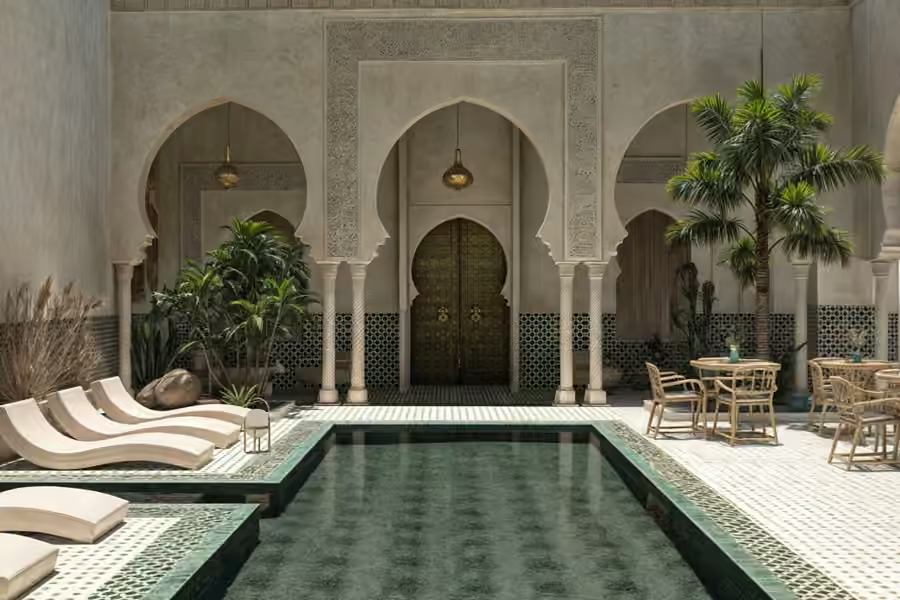
The classic place to stay is a riad, a traditional house built around a courtyard garden, now often a small guesthouse in the medina, with breakfast on the roof terrace. Riads are found in every old city, from Tangier and Chefchaouen to Fes and Marrakech, and many can only be reached on foot through the lanes. In the south, kasbah hotels are built in the old earth style, and in the mountains simple guesthouses welcome hikers.
In the Sahara, desert camps near Merzouga range from simple tents to comfortable ones with private bathrooms. Big cities and beach towns, like Casablanca, Rabat and Essaouira, also have modern hotels of every level, as well as international chains.
- In short
- Riads, kasbahs, desert camps
- Our tip
- In a medina, ask your riad to meet you at the nearest gate on arrival
Tagines and mint tea
8. Food and drink in Morocco
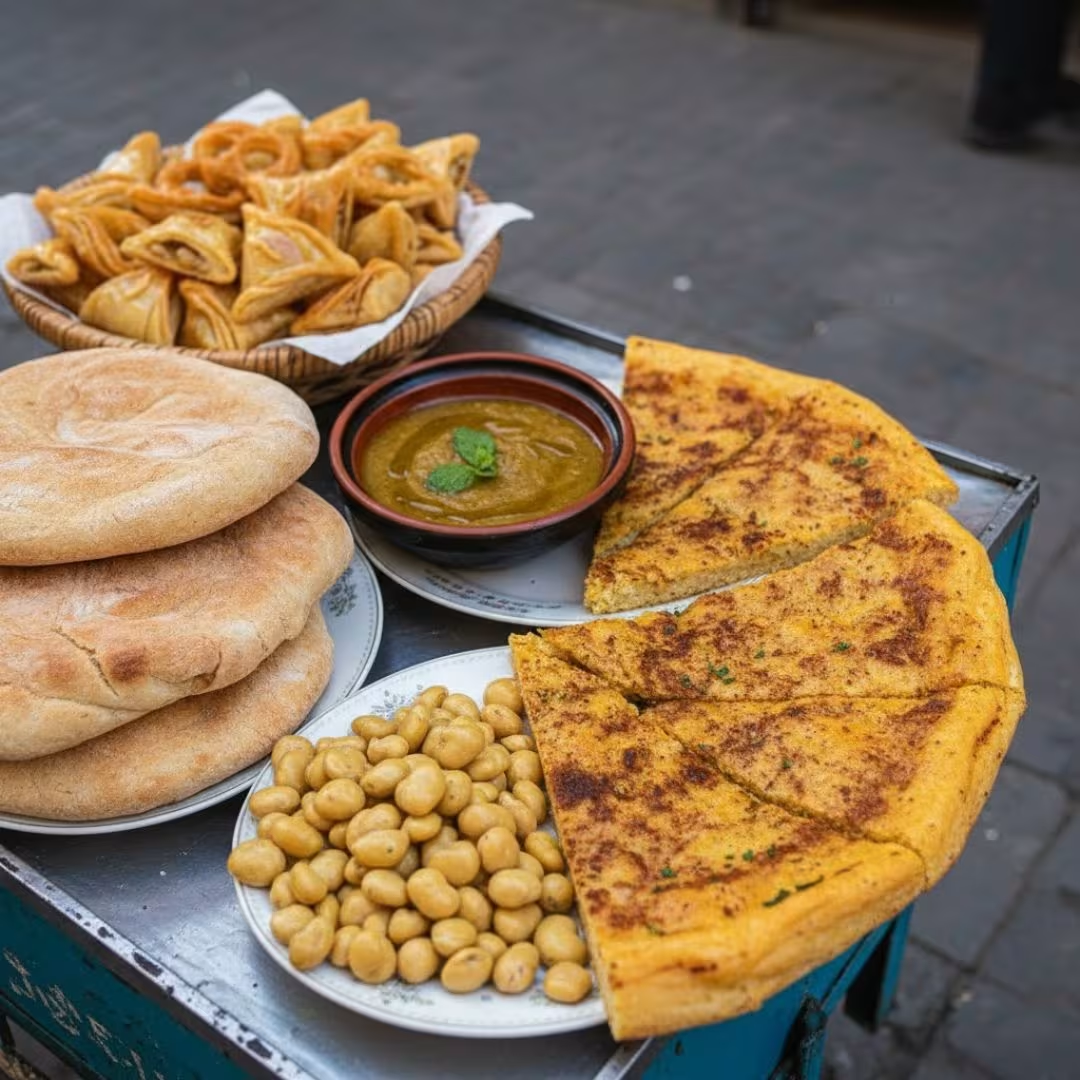
Moroccan food is one of the joys of the trip: tagines slow-cooked with preserved lemon and olives, couscous on Friday, harira soup, pastilla, grilled fish on the coast and, in Tangier, bissara for breakfast and kalinte from the street stalls. Mint tea is offered everywhere, and fresh orange juice costs very little.
Most visitors drink bottled water, sold everywhere. Alcohol is served in licensed hotels, bars and restaurants and sold in some supermarkets in the cities, but not in most local cafés, and drinking in the street is not acceptable. Pork is not part of Moroccan cooking.
- In short
- Tagine, mint tea, bottled water
- Our tip
- Eat where local families eat, and try the bread from the neighbourhood oven
Customs to know
9. Culture, customs and etiquette for visitors
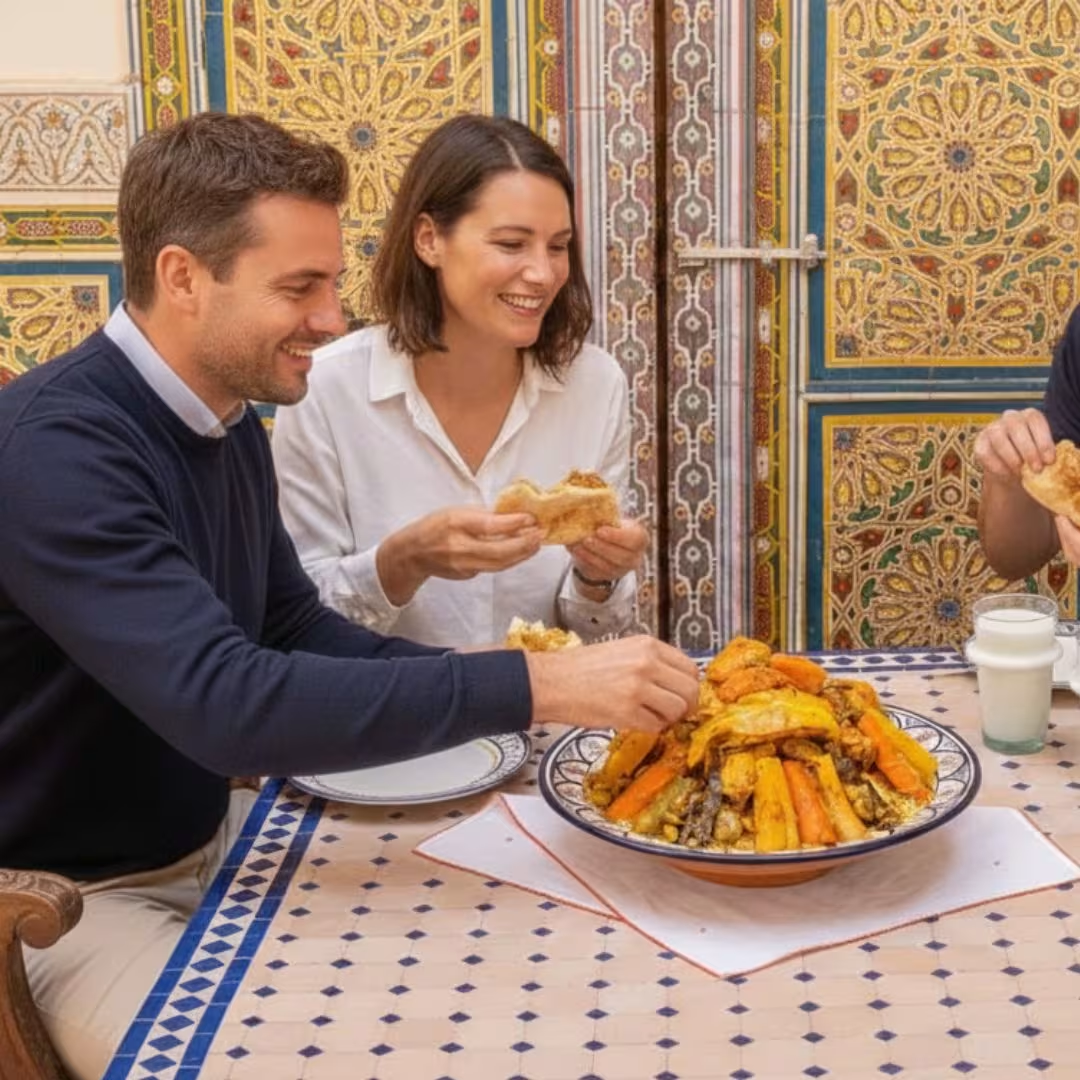
Moroccans are warm and welcoming, and a few customs help. Greet people with salam alaikum, eat and give things with your right hand, accept the tea you are offered, and ask before you photograph anyone. Bargaining is normal in the souks: offer less than you would pay, meet in the middle, and walk away politely if you do not agree.
Most working mosques are open to Muslims only; the Hassan II Mosque in Casablanca welcomes visitors on guided tours. There is no special dress code for visitors: wear what you would wear in a European city, with comfortable shoes for the lanes. Friday is the day of the main prayer, and some shops close at midday.
- In short
- Right hand, ask before photos
- Our tip
- Learn shukran, thank you: it opens many doors
Staying connected
10. Language, phones, plugs and time
Most Moroccans speak Darija, Moroccan Arabic, and many speak French; Arabic and Tamazight are the official languages, many people in the north speak Spanish, and English is common in hotels, shops and among young people. Local SIM cards from Maroc Telecom, Orange and inwi are sold at airports, ports and phone shops with your passport, and many phones can take an eSIM.
Sockets are type C and E, 220 volts, the same as most of Europe. Morocco uses GMT+1 for most of the year and switches to GMT during Ramadan, so check the time if you travel then.
- In short
- Local SIM, European plugs
- Our tip
- Download an offline map before you walk into a medina
Stay safe
11. Safety and health: is Morocco safe?
Morocco is generally safe for tourists, and violent crime against visitors is rare. Most people you meet will be friendly and helpful. Watch for pickpockets in crowds, say no politely to unofficial guides, and read your government's travel advice before you go. In an emergency, call 19 for the police or 15 for an ambulance.
No special vaccinations are required for most travellers, but ask your doctor before you go. Pharmacies, marked with a green cross, are everywhere and helpful for small problems. Bring sun protection, drink plenty of water in the heat, and take out travel insurance.
- In short
- Safe, with common sense
- Our tip
- Official guides carry a Ministry of Tourism badge: ask to see it
Experiences
Things to do in Morocco
In a family home
Take a cooking class
Shop at the market with a local cook, make a tagine and bread, and share the meal at the family table.
High Atlas and Rif
Trek in the Atlas
From easy walks between villages to the climb of Toubkal, with valleys, gorges and Amazigh hospitality on the way.
Merzouga
A night in the Sahara desert
A camel ride into the dunes at sunset, dinner around the fire and a sky full of stars.
The Atlantic coast
Surf the Atlantic at Essaouira
Steady winds and waves for surfers, windsurfers and kitesurfers of every level.
Every medina
Explore the souks of Marrakech and Fes
Spices, leather, carpets and ceramics, and the craftsmen who make them, with bargaining as part of the fun.
Traditional bathhouses
Try a hammam
Steam, black soap and a good scrub, the way Moroccans have relaxed for centuries.
Plan your trip
Morocco itineraries, from 3 days to 2 weeks
How much of Morocco fits in your trip, starting in Tangier in the north. Every day of driving is part of the experience.
- 3 days
Tangier, Chefchaouen and the north
Tangier, the blue town of Chefchaouen, Tetouan and Asilah.
- 1 week
The north, Fes and Meknes
Add Fes and its medina, with Meknes and Volubilis on the way.
- 10 days
The imperial cities and the Sahara desert
Fes, the Middle Atlas, a night at Merzouga, the gorges, Ait Ben Haddou and Marrakech.
- 2 weeks
The grand loop: Marrakech, Casablanca and Essaouira
Add Rabat and Casablanca, the High Atlas and a few days by the sea in Essaouira.
Tours that follow these routes
 Northern Morocco Loop3 days / 2 nights
 Tangier to Fes3 days / 2 nights
 Imperial Cities & Sahara9 days / 8 nights
Every tour is private and can be changed to your dates and pace.
Good to know
Morocco travel tips: your questions
What should I know before traveling to Morocco?
Many nationalities need no visa for up to 90 days. Carry cash in dirhams for the souks and taxis, drink bottled water, bargain with a smile, ask before you photograph people, and take a licensed guide in the big medinas. Spring and autumn are the best seasons for a trip around the whole country.
Do I need cash in Morocco?
Yes. Hotels and larger restaurants take cards, but the souks, small cafés and taxis take cash. The dirham is a closed currency, so take it from a cash machine or change money when you arrive.
What should I wear in Morocco?
There is no special dress code for visitors: wear what you would wear in a European or American city, with comfortable shoes for the medinas, and a warm layer for desert and mountain nights.
Can you drink the tap water in Morocco?
Most visitors drink bottled water, which is sold everywhere and cheap. Use it for brushing your teeth too if you have a sensitive stomach.
Can tourists drink alcohol in Morocco?
Yes, in licensed hotels, bars and restaurants, and alcohol is sold in some supermarkets in the cities. Most local cafés do not serve it, and drinking in the street is not acceptable.
What is the best way to travel around Morocco?
Trains between the big cities, buses for the smaller towns, and a car with a driver for the mountains, the gorges and the Sahara, where public transport is slow.
More from the journal
Keep reading
Ready when you are
Plan your Morocco trip with a local guide
Tell us your dates, where you land and what you would like to see. A licensed guide replies within 12 hours with a route and an exact price.
- Private tours for your group
- No deposit for day tours
- Reply within 12 hours
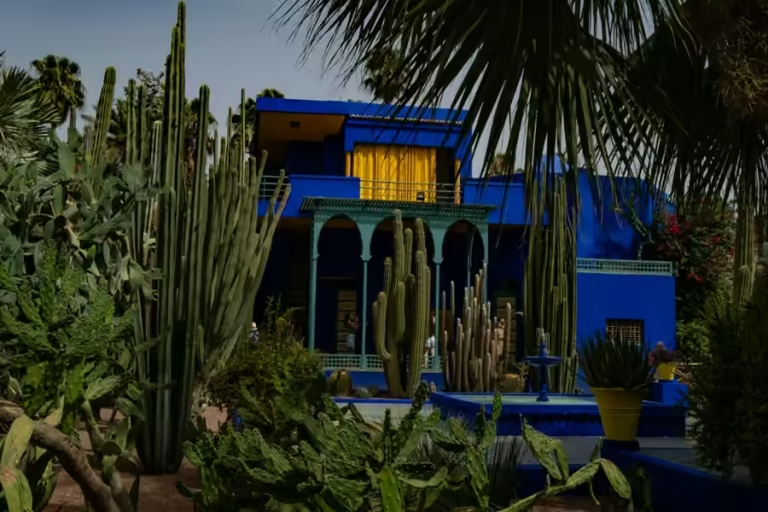
Photos: Tour Guide Tangier, except the Bahia Palace (Val Traveler, CC BY-SA 4.0), the Dades Gorge (Nawfal Kharbach, CC BY-SA 4.0) and the Ziz valley (Ben Bender, CC BY-SA 3.0), via Wikimedia Commons, Ait Ben Haddou (Alex Azabache, via Unsplash), and the lanterns (Youssef Ouaatar) and the riad (achraf borkadi), via Pexels.