The Tangier JournalWritten by licensed guides
Before you book · An honest answer from Tangier
Is Morocco Worth Visiting? 10 Reasons Tourists Love It
Is Morocco worth visiting, and is it safe? Licensed guides who show visitors their country every day give an honest answer: ten reasons to travel to Morocco, the downsides, safety tips and how many days you need.
In this article 16 sections
In short
Is Morocco worth visiting? The short answer
Yes. Morocco is worth visiting for almost every kind of traveller: old medinas, the Sahara desert, the Atlas Mountains, two coasts and some of the best food in Africa, all a short flight or a one-hour ferry from Europe. It is generally safe for tourists, with the common sense you would use in any big city. What disappoints some visitors, the hassle in the big medinas and the summer heat, is easy to avoid with the right season and a licensed guide.
- 01The medinas
- 02The SaharaAt least 2 nights from Fes
- 03The mountains
- 04The food
- 05The people
- 06The coloursA day trip from Tangier, or one night
- 07The history
- 08Two coasts
- 09Close to EuropeA day is enough for a first taste
- 10Crafts and value
Below: the ten reasons our guests give most often, then the honest downsides, safety tips and how many days you need.
Morocco sits near the top of many travel lists, and every week people ask us the same questions before they book: is Morocco worth visiting, is it safe, and is it as hectic as they have heard? We are licensed guides in Tangier, where Africa faces Europe across the Strait of Gibraltar, and we show visitors our country every day. Here is our honest answer.
Morocco has something for most travellers, especially on a first trip to Africa: culture and history in the imperial cities, adventure in the mountains and the desert, rest on the beaches, and food worth the trip on its own. Few other destinations this close to Europe offer so much in one country. These are the ten reasons we hear most often from the people we guide.
Cities that kept their past
1. The old medinas of Morocco's cities
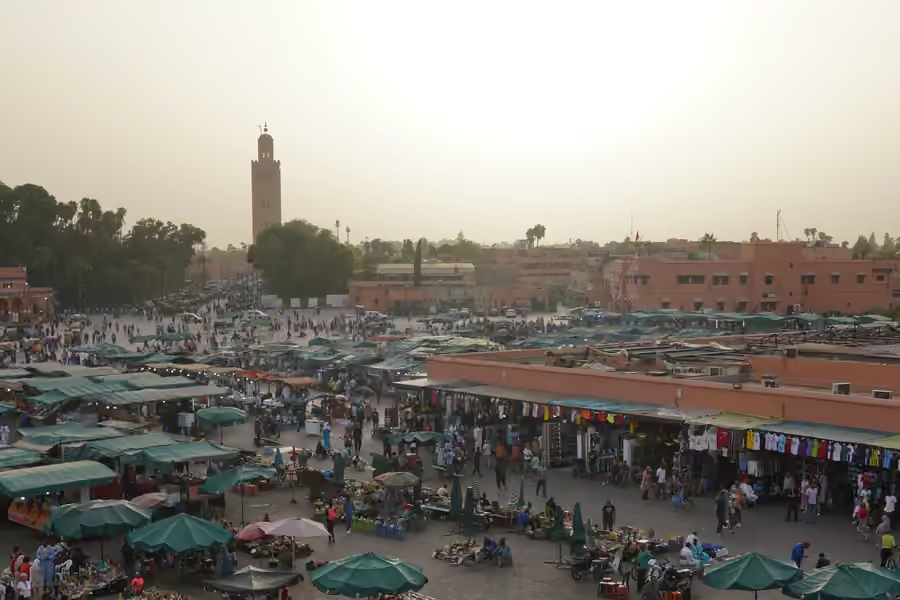
Morocco's old cities are the first reason to go. The medinas of Fes, Marrakech, Tetouan and Tangier are walled towns of lanes, souks, mosques and fountains where people still live, work and shop the way their families did for centuries. Fes el-Bali is one of the largest car-free urban areas in the world, and the medinas of Fes, Marrakech, Tetouan and Essaouira are UNESCO World Heritage sites.
The best way to see them is simply to walk: a carpenter planing cedar, bread carried to the neighbourhood oven, the call to prayer over the rooftops, a glass of tea at an old café such as Café Hafa in Tangier, open since 1921. The first time, a guide makes all the difference, because the lanes are a maze and every door has a story.
- Where
- Fes, Marrakech, Tetouan, Tangier, Chefchaouen
- Our tip
- Take a licensed guide for your first walk: the medinas are real mazes
Dunes and stars
2. The Sahara desert at Merzouga
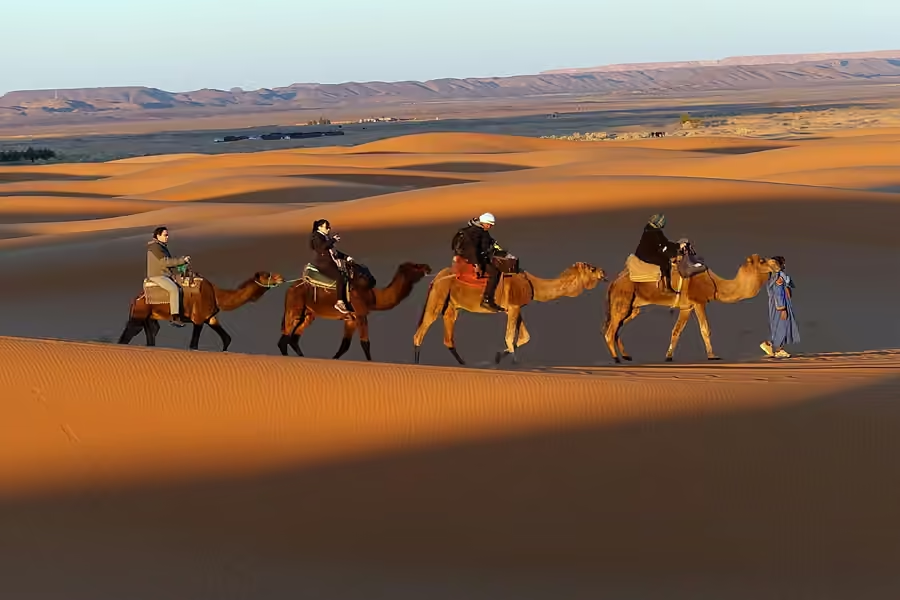
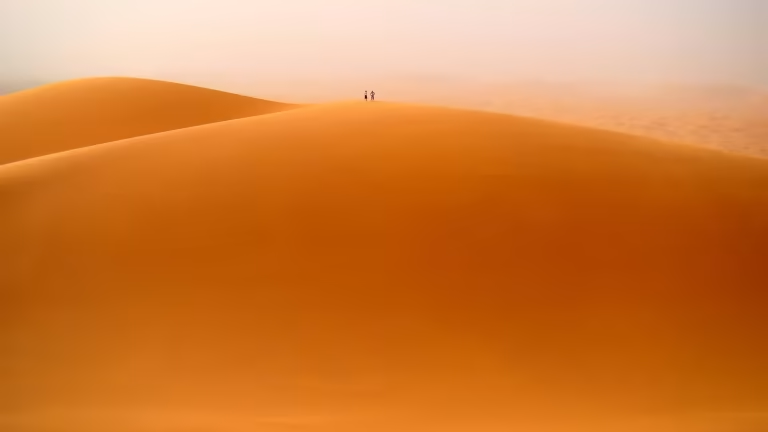
For many travellers the Sahara is the moment that makes Morocco worth the trip. The dunes of Erg Chebbi, near Merzouga, rise to about 150 metres: you ride a camel into them late in the afternoon, watch the sunset from the crest, eat around the fire in a desert camp and sleep under more stars than you have ever seen.
The desert is a long day's drive from Fes, so it belongs to a trip of a week or more. The road there crosses the Middle Atlas, its cedar forests and the Ziz valley, and the drive is part of the experience.
- Where
- Erg Chebbi, near Merzouga, in the south-east
- Time
- At least 2 nights from Fes
Peaks, valleys and gorges
3. The Atlas Mountains, the Rif and their valleys
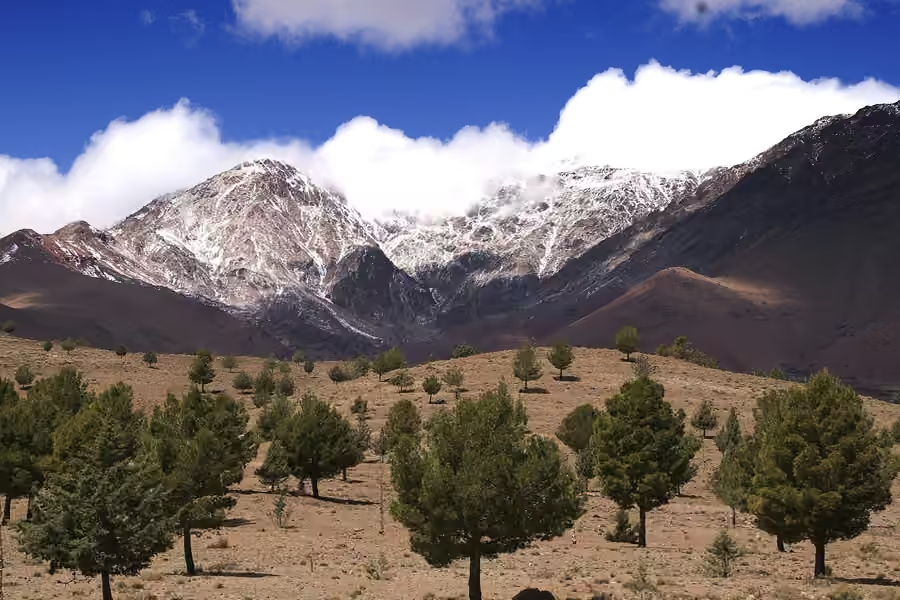
Morocco has real mountains. The High Atlas rises above 4,000 metres at Jebel Toubkal, the highest peak in North Africa, with Amazigh villages, walnut trees and terraced fields in its valleys, and the Todra Gorge and the Dades Valley cut through the rock on the way to the desert. In the north, the Rif Mountains around Chefchaouen offer green hikes to waterfalls such as Akchour.
Spring brings wild flowers and snow on the peaks; in summer the mountains are a cool escape from the heat of the plains.
- Where
- The High Atlas near Marrakech, the Rif near Chefchaouen
- Best for
- Hiking, photography and village life
Tagines, bread and spices
4. Moroccan food, from street stalls to the family table
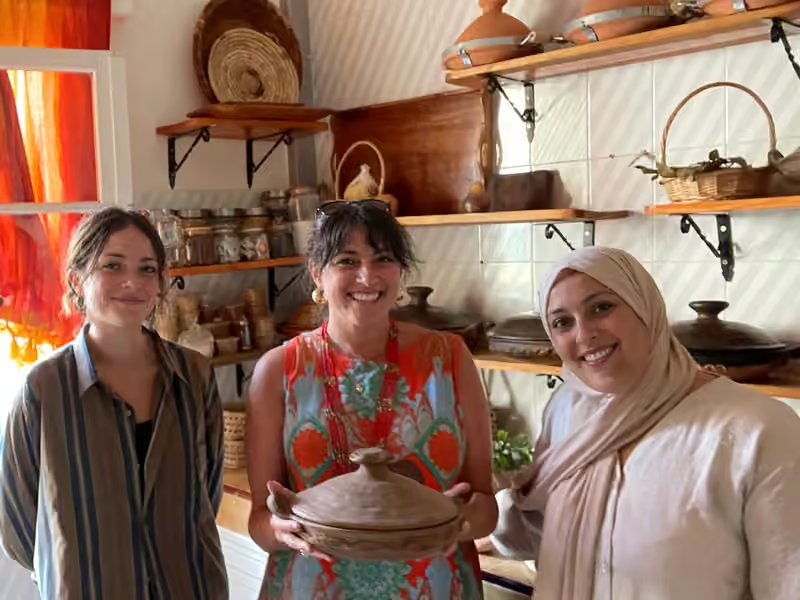
For many visitors the food alone makes Morocco worth visiting. Tagines slow-cooked with preserved lemon and olives, couscous on Friday, harira soup, pastilla, and in Tangier a breakfast of bissara and the street snack called kalinte. Spices from the market, bread from the neighbourhood oven and fruit that tastes of the sun.
Moroccan cooking is at its best in homes and small local places. The easiest way in is to eat with locals: a food tour through the markets and street stalls, or a cooking class in a family home, where you shop for the ingredients, cook a tagine and share it at the table.
- Our tip
- Eat where the local families eat, and try the bread
- Try it in Tangier
- Bissara for breakfast, kalinte from a street stall
Mint tea for every guest
5. Moroccan hospitality and the mint tea
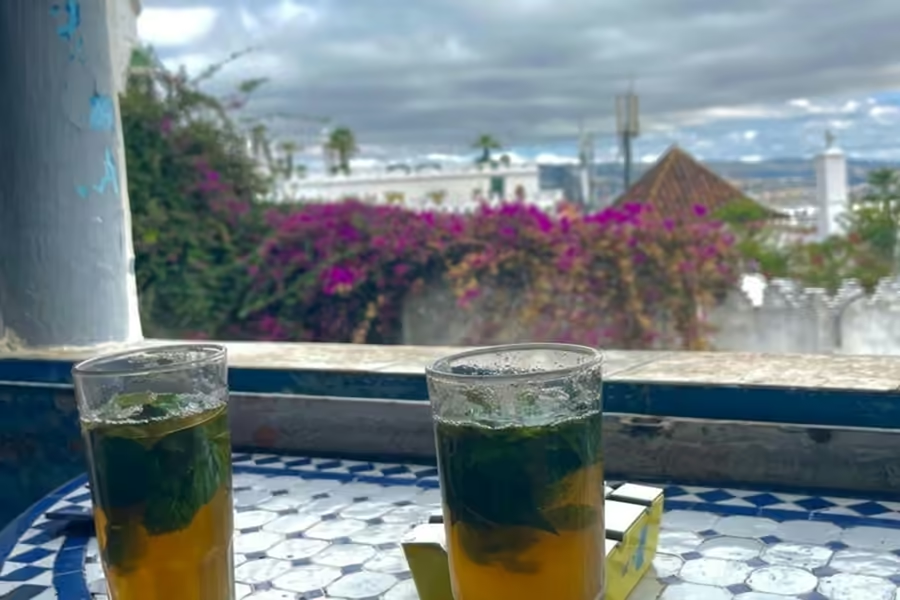
Ask travellers what they remember most and many say the people. Hospitality is a real tradition in Morocco: a guest is welcomed with mint tea, poured from high to raise the foam, in shops, homes and offices, families invite visitors to share a meal, and people are proud to show their country to visitors.
Moroccans are also good with languages. Most people speak Darija and French, many in the north speak Spanish, and English is now common in hotels, shops and among young people.
- Our tip
- Accept the tea you are offered: it is a welcome
- Good to know
- Greet people with salam alaikum
Blue, white and red
6. Chefchaouen and the colours of Morocco
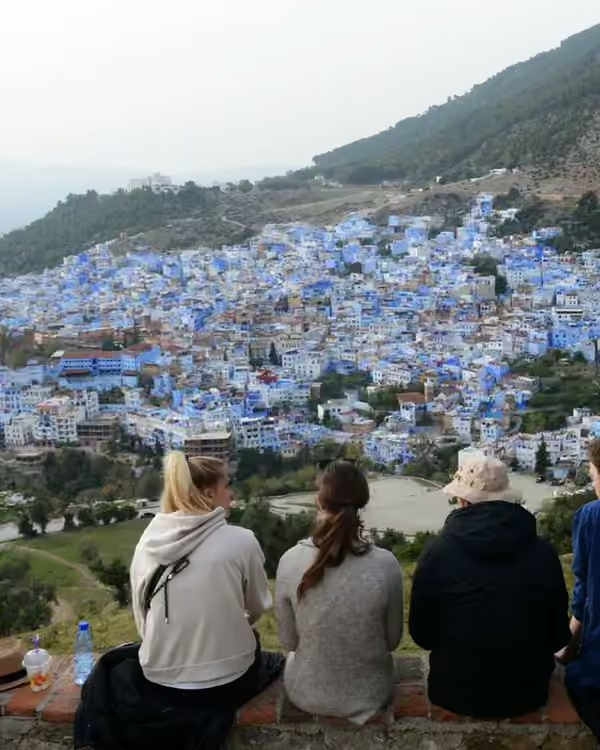
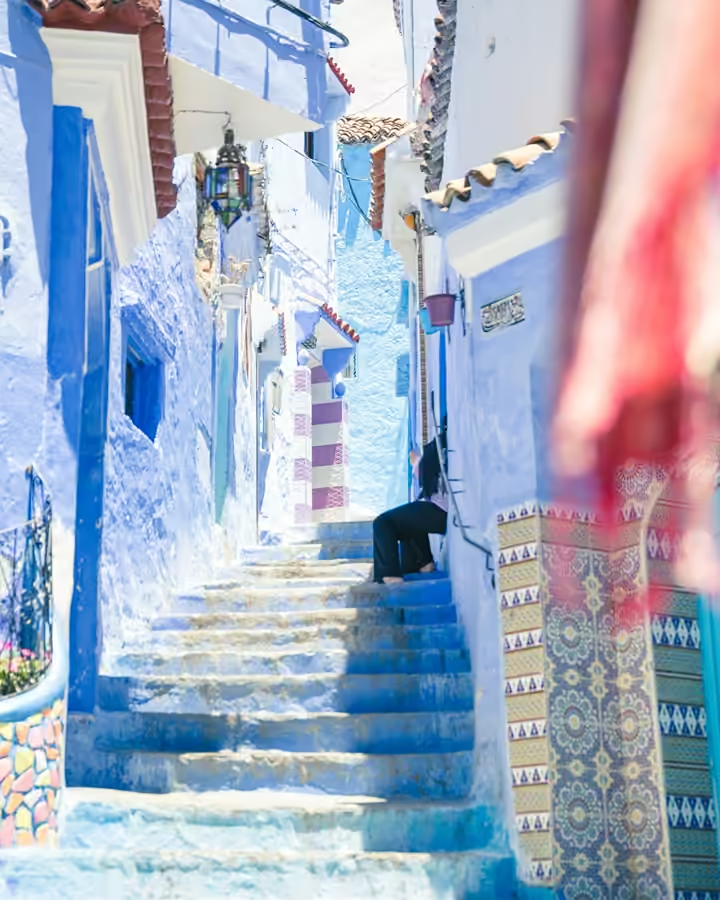
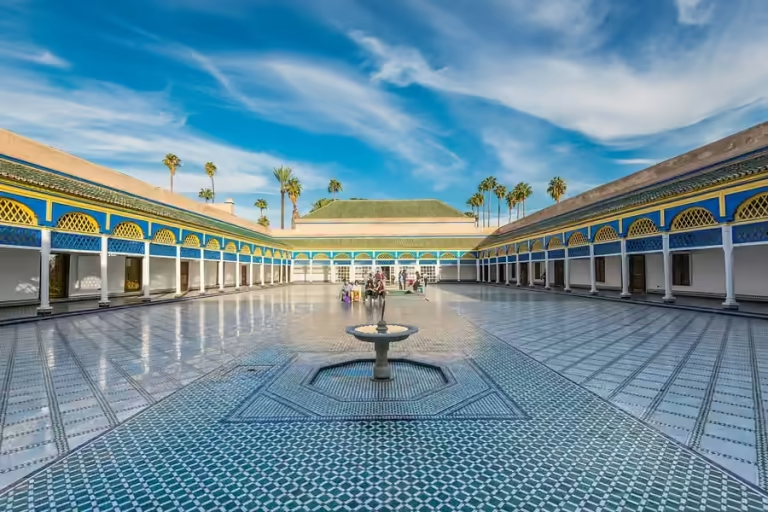
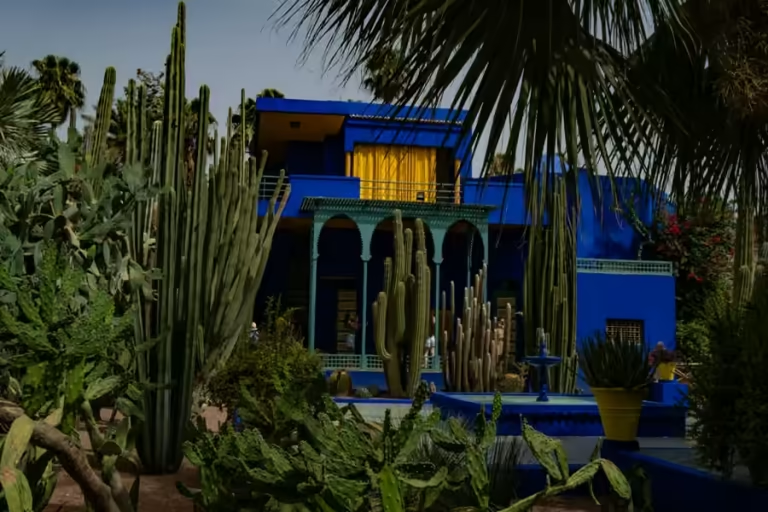
Morocco is a country of colour: the blue lanes of Chefchaouen in the Rif, the white medinas of Tetouan and Asilah, the red walls of Marrakech, the zellige tiles in every palace and fountain, the dye pits of the Fes tannery. Photographers love it, and so does anyone with a phone.
Chefchaouen is the favourite. About 115 km from Tangier, a two-hour drive through the Rif, it is calm, small and blue from top to bottom. Go early, or stay the night, to have its lanes almost to yourself.
- Where
- Chefchaouen, in the Rif Mountains
- Time
- A day trip from Tangier, or one night
Rome, sultans and kasbahs
7. History you can touch: Roman ruins, imperial cities, kasbahs
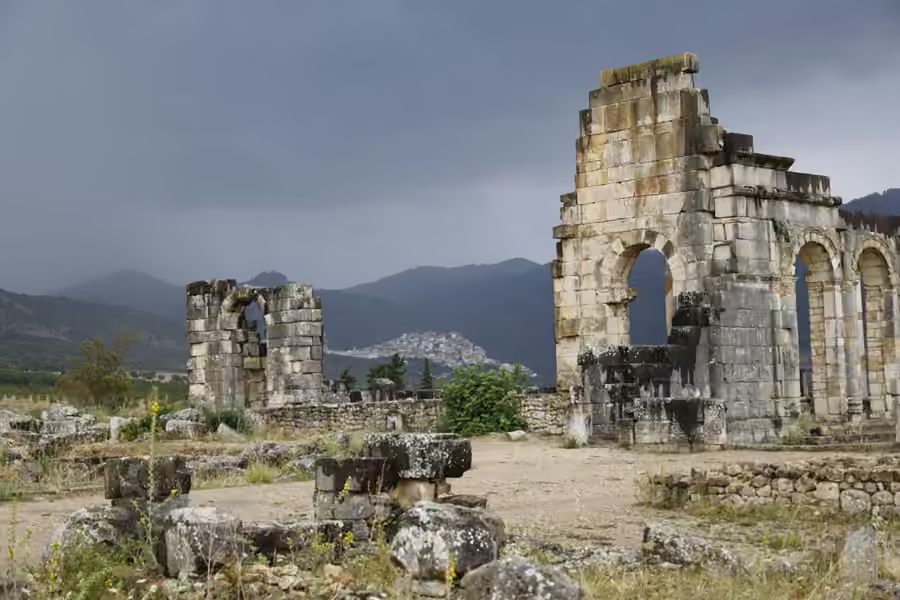
Morocco has been a crossroads for more than 2,500 years. Walk through the Roman city of Volubilis with its mosaics still in place, the four imperial cities of Fes, Meknes, Rabat and Marrakech, the kasbah of Ait Ben Haddou on the old caravan road, and Tangier, where Phoenicians, Romans, Portuguese, English and a dozen consulates left their mark.
The story is easy to follow with a guide: the dynasties, the Andalusian refugees who shaped the northern towns, the protectorates and independence in 1956.
- See it
- Volubilis, Fes, Meknes, Rabat, Ait Ben Haddou, Tangier
- Best for
- Culture and history lovers
The Mediterranean and the Atlantic
8. Two seas and long beaches
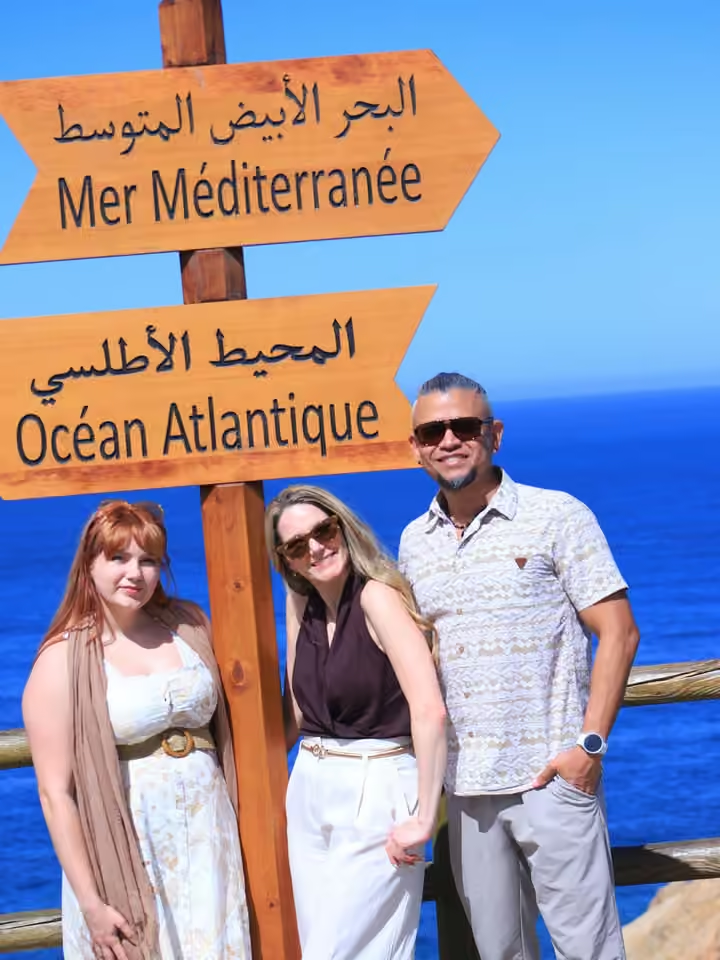
Morocco is the only country in Africa with coasts on both the Mediterranean and the Atlantic, and at Cap Spartel, just west of Tangier, you can see where they meet. Along the Atlantic come the long beaches of Achakkar and Asilah, the surf towns of the south and the ramparts and fishing port of Essaouira.
The coast is also where Morocco slows down: grilled fish at the port, a swim, a walk on the sand at sunset. It is the perfect rest after the medinas and the desert.
- Where
- Tangier, Asilah, Essaouira, the Mediterranean coves
- Best for
- Rest, beaches and seafood
An hour from Spain
9. Close to Europe and easy to reach
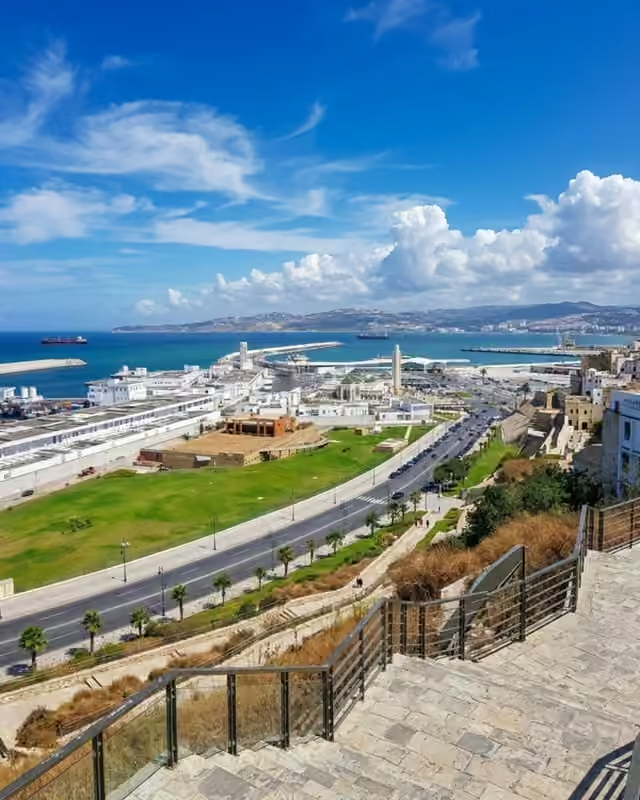
Morocco is a short flight from most of Europe, and from Spain it is closer still: the fast ferry from Tarifa reaches Tangier in about an hour. That makes it easy for a first trip to Africa, a day trip or a long weekend from Andalusia, or a cruise stop in Tangier.
Citizens of the UK, the US, Canada, Australia and the European Union do not need a visa for a tourist stay of up to 90 days. Morocco uses the dirham, and there are cash machines in every city.
- Where
- Tangier, across the Strait from Tarifa
- Time
- A day is enough for a first taste
Souks and workshops
10. Crafts, souks and good value
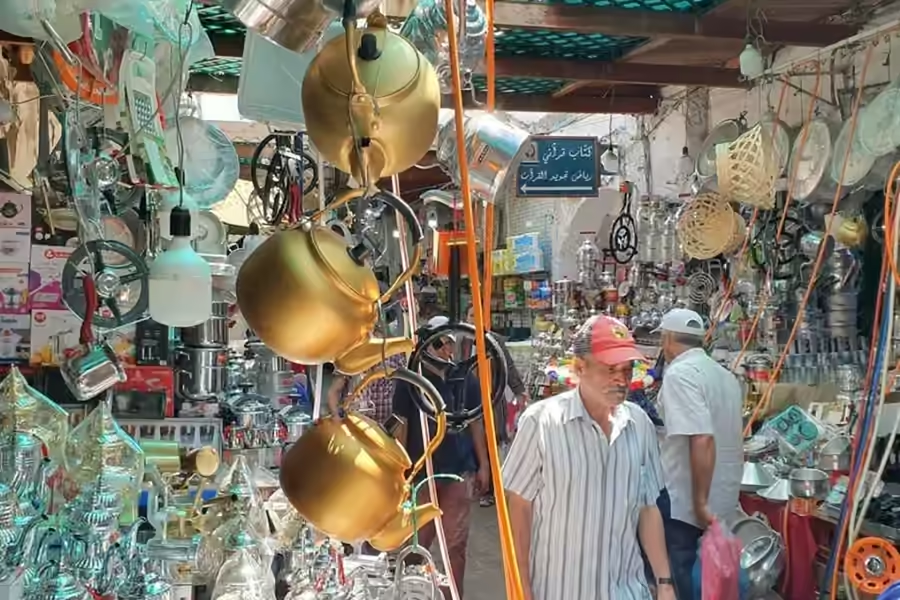
Moroccan crafts are still made by hand, and you can watch them being made: carpets and kilims, leather from the tanneries, zellige tiles, cedar wood, brass lamps, pottery and argan oil. Bargaining is part of the fun, and a local guide can tell you what a fair price looks like.
Day to day, Morocco is good value next to Europe: a meal in a local restaurant, a taxi across town or a glass of tea cost little, and a private guide is within reach of most travellers. Our private tours in Tangier start from $25 per person.
- Our tip
- Decide what an item is worth to you before you start to bargain
- Shop in Tangier
- The Souk Dakhel, the Fondouk Chejra and the Grand Socco
Safety
Is Morocco safe for tourists?
Yes, Morocco is generally safe for tourists, and it is one of the most visited destinations in Africa: the country welcomed a record of more than 17 million visitors in 2024. Violent crime against tourists is rare. The problems visitors do meet are small ones, like pickpockets in crowds, touts and unofficial guides in the medinas, and taxis that forget the meter.
Government advice for Morocco, as for Spain or France, mentions a general threat of terrorism, and security is always visible at stations, main sights and hotels. Take the same precautions you would at home: keep valuables out of sight, stay alert in crowded areas and follow local advice. In an emergency, call 19 for the police or 15 for an ambulance. Before you travel, read your government's travel advice for Morocco, such as the UK Foreign Office page, and take out travel insurance.
Many women travel alone in Morocco. Some meet comments or unwanted attention in the busy medinas: walking with confidence, ignoring the comments and going out with a guide or a group in the evening all help. There is no special dress code for visitors; wear what you would wear in a European city, with comfortable shoes for the lanes. In the evening the main squares and seafronts stay busy with local families until late.
Travel tips
Safety and travel tips: what to know before you go
In the medinas
Use licensed guides
Official guides always carry a badge from the Ministry of Tourism. Politely say no to anyone who offers to show you the way; a man telling you a street is closed usually wants to lead you to a shop.
Taxis
Ask for the meter
Petit taxis in the cities should run the meter, le compteur: ask for it before you set off, or agree the fare first. Grand taxis between towns have set fares.
Money
Carry some cash
Keep dirhams for the souks, cafés and taxis, keep your phone and wallet in a front pocket in crowds, and use cash machines inside banks.
Health
Bottled water
Most visitors drink bottled water, sold everywhere. Bring any medicine you need, and travel insurance.
Transportation
Trains, buses and drivers
The Al Boraq high-speed train links Tangier to Rabat and Casablanca, other trains run on to Fes, Meknes and Marrakech, and CTM and Supratours buses cover the rest. For the mountains and the desert, a car with a driver is the easiest way to travel.
Shopping
Bargain with a smile
Prices in the souks are a starting point. Offer less than you would pay, meet in the middle, and walk away politely if you do not agree.
The honest part
What some travellers don't like about Morocco
Marrakech and Fes
The hassle
Touts, shop callers and would-be guides can wear you down while you walk the busiest medinas. Chefchaouen, Tetouan, Asilah and the countryside are much calmer, and a guide at your side stops most of it.
July and August
The summer heat
Inland, Marrakech and Fes are very hot in high summer and the desert is hotter still. Spring and autumn are the best time to visit Morocco for a tour of the whole country; the north and the coast stay pleasant in summer.
Planning
The distances
Morocco is bigger than it looks: Tangier to Marrakech is a long day's drive, and the Sahara is further still. Plan the route well: choose one region, or give the whole country ten days.
The month of fasting
Ramadan
Some cafés and restaurants close during the day and the pace slows. Hotels, tourist restaurants and sights stay open, and the evenings are lively.
Planning
How many days do you need in Morocco?
Morocco is worth visiting for a day or for a month. This is what fits in each length of trip, starting from Tangier.
- 1 day
Tangier from Spain or a cruise ship
The Kasbah, the medina, Cap Spartel and the Caves of Hercules with a guide.
- 3 days
Tangier, Chefchaouen and Tetouan
The north: the Strait, the blue town and the white Andalusian medina.
- 5 days
The north and Fes
Add Fes and its medina, with Volubilis on the way.
- 10 days
North to the Sahara and Marrakech
Fes, the Middle Atlas, a night in the dunes, the gorges, Ait Ben Haddou and Marrakech.
Tours that fit
 Tangier Full Day Tour6–7 hrs · first-time visitors · from $65
 Northern Morocco Loop3 days / 2 nights
 Imperial Cities & Sahara9 days / 8 nights
See the full route in our guide to the best places to visit in Morocco.
Good to know
Visiting Morocco: your questions
Is Morocco worth visiting?
Yes. In one country you get old medinas, the Sahara desert, the Atlas Mountains, two coasts and some of the best food in Africa, a short flight or a one-hour ferry from Europe. Choose the right season, take a guide in the big medinas, and most visitors leave wanting to come back.
Is Morocco safe for tourists?
Yes, Morocco is generally safe for tourists. Violent crime against visitors is rare; the usual problems are pickpockets, touts and unofficial guides. Read your government's travel advice before you go, stay alert in crowds and use licensed guides.
Is Morocco safe for women travelling alone?
Many women travel alone in Morocco. Expect some comments in the busy medinas: ignore them, walk with confidence, and take a guide or join a group in the evening if you prefer. Wear what you would wear in a European city, with comfortable shoes.
Do I need a visa to visit Morocco?
Citizens of the UK, the US, Canada, Australia and the European Union do not need a visa for a tourist stay of up to 90 days. Check your government's advice for the passport rules before you travel.
How many days do you need in Morocco?
One day is enough for Tangier from Spain, three to five days for the north and Fes, and ten days or more to add the Sahara and Marrakech.
Do I need a guide in Morocco?
You do not need one, but a licensed guide makes the medinas easy, keeps touts away and explains what you see. Official guides carry a Ministry of Tourism badge. Ours reply within 12 hours with a plan and an exact price.
More from the journal
Keep reading
Ready when you are
See Morocco with a licensed guide
Tell us your dates and what you would like to see. A licensed guide replies within 12 hours with a plan and an exact price, and private tours need no deposit.
- No deposit
- Private tours for your group
- Reply within 12 hours
Photos: Tour Guide Tangier, except Chefchaouen (Ryutaro Tsukata), Jemaa el-Fna (Mahmut Yilmaz) and Volubilis (Christophe Rascle), via Pexels, and the camel caravan (Fbrandao.1963, CC BY-SA 4.0) and the High Atlas (Michal Osmenda, CC BY-SA 2.0), via Wikimedia Commons.