The Tangier JournalWritten by licensed guides
Culture · The soul of Morocco
Moroccan Culture: The Soul of Morocco
Moroccan culture explained by the licensed guides who live it: its Amazigh, Arab, Andalusian and African roots, the hospitality and the mint tea, the food, the crafts and the music, and the customs that help a visitor feel at home.
In this article 13 sections
In short
Moroccan culture at a glance
Moroccan culture is a blend of Amazigh (Berber), Arab, Andalusian, African and European influences, held together by Islam, family and a deep sense of hospitality. Visitors meet it in the mint tea offered in every shop and home, in food shared from one dish, in crafts still made by hand, in music from Andalusian orchestras to Gnawa, and in daily customs that are easy to learn.
- 01Many roots, one culture
- 02Faith and the day
- 03Languages
- 04Moroccan hospitality
- 05The mint tea ceremony
- 06Food and the shared table
- 07Crafts
- 08Music
- 09Customs for visitors
The quickest way in: a glass of mint tea with a local family, a meal from a shared tagine, and an hour in the souks with someone who can explain what you are looking at.
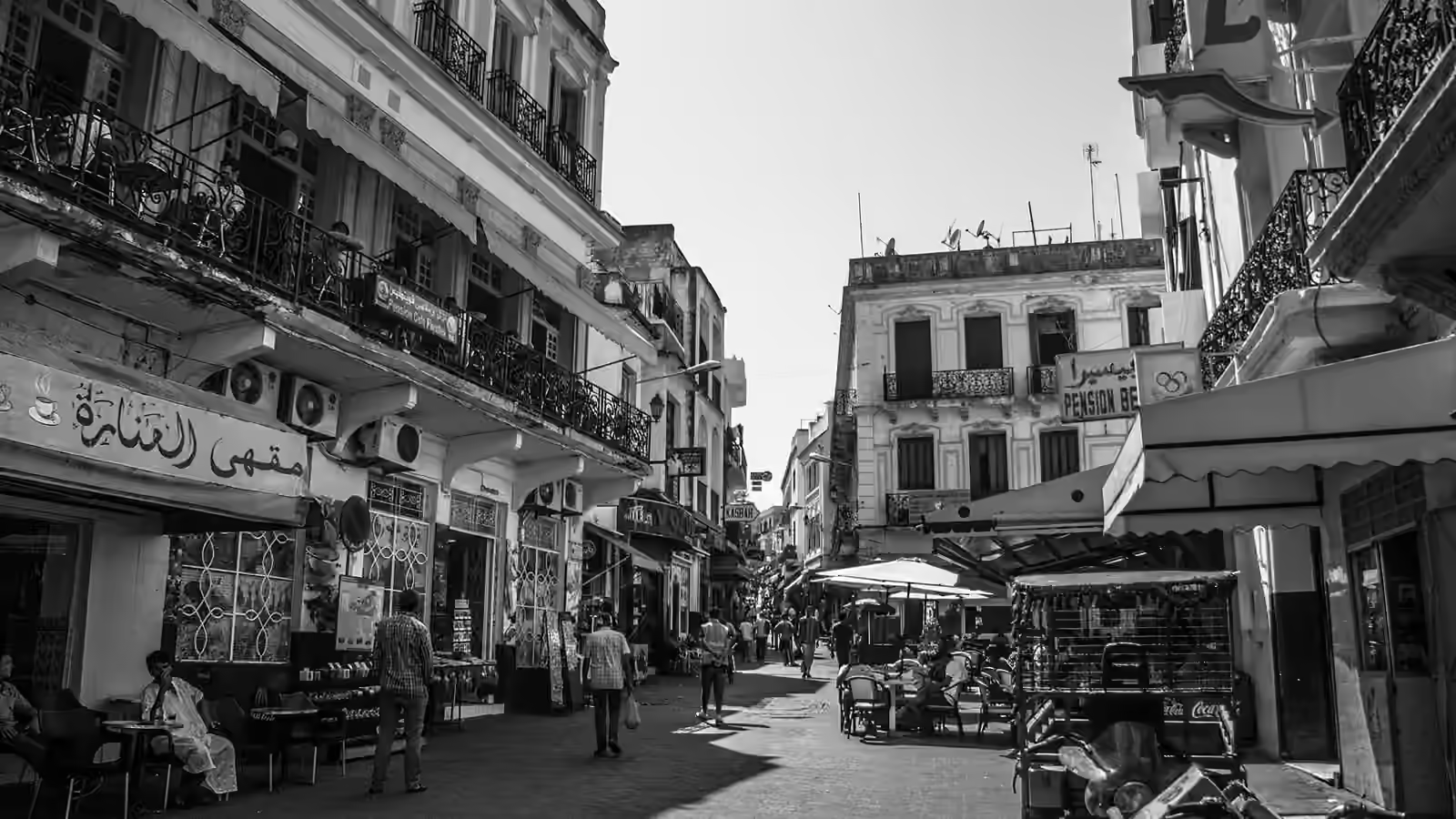
Morocco is a land of bright colours, ancient traditions and very different landscapes, from the Mediterranean coast to the Atlas Mountains and the Sahara desert. What stays with most visitors, though, is the people: a culture shaped by centuries of history and a welcome that treats a guest as a gift, a traditional value in every part of the country.
This guide is written from Tangier, where Africa faces Europe and where Moroccan culture has always met others. It covers what shapes daily life in Morocco, what a traveller will see and taste, and the customs that make a stay easier, with the places in Tangier where you can experience each one.
A tapestry of influences
1. Many roots: the history of Moroccan culture
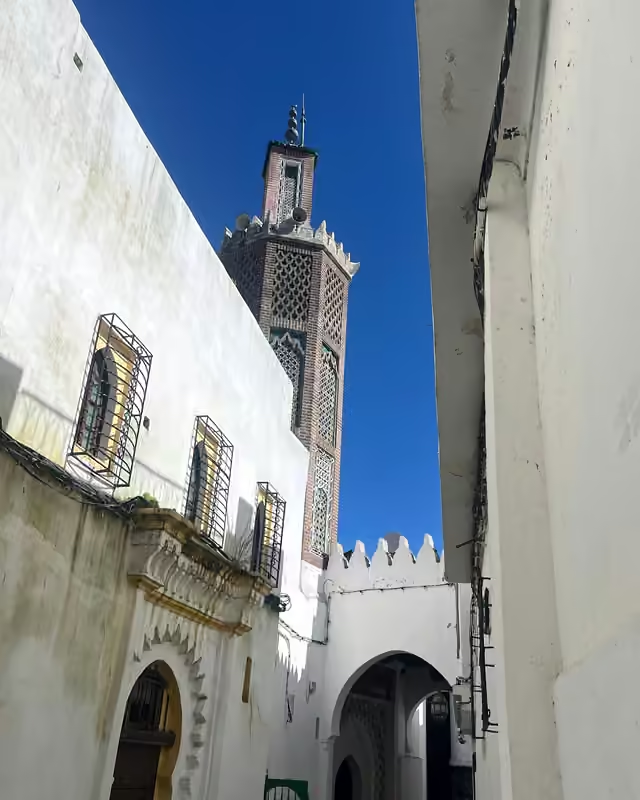
Moroccan culture is a mosaic built over centuries. The Amazigh (Berber) people, the first inhabitants of North Africa, gave the country its oldest language, its weaving and pottery, and much of its music, above all in the Atlas Mountains and the desert regions.
Arabs brought Islam, the Arabic language and a literary tradition from the 7th century, while Muslims and Jews expelled from Andalusia brought their architecture, their music and their cooking. Sub-Saharan Africa left its mark on music and spiritual life, and France and Spain on the cities, the schools and the languages people use today. The result is a cultural identity found nowhere else in the world, one that values tradition and has always adapted.
- See it in Tangier
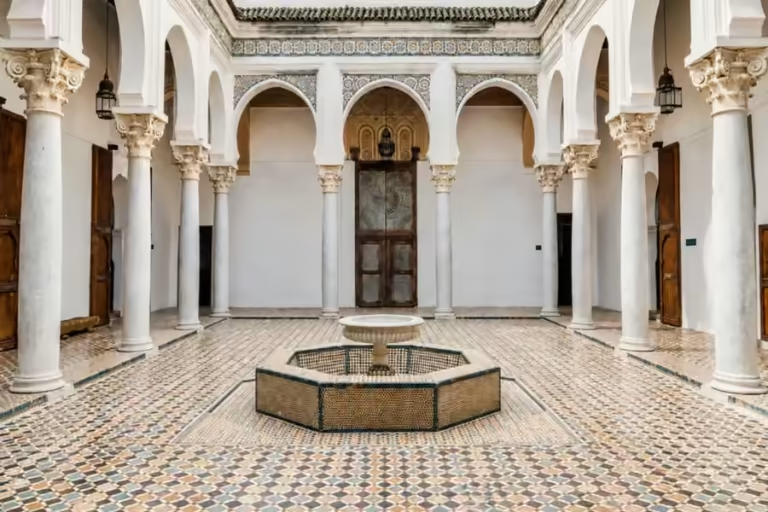
- The Kasbah Museum, from Roman Tingis to the sultans
- Good to know
- Amazigh culture is strongest in the mountains and the south
Islam, and room for others
2. Faith and the rhythm of the day
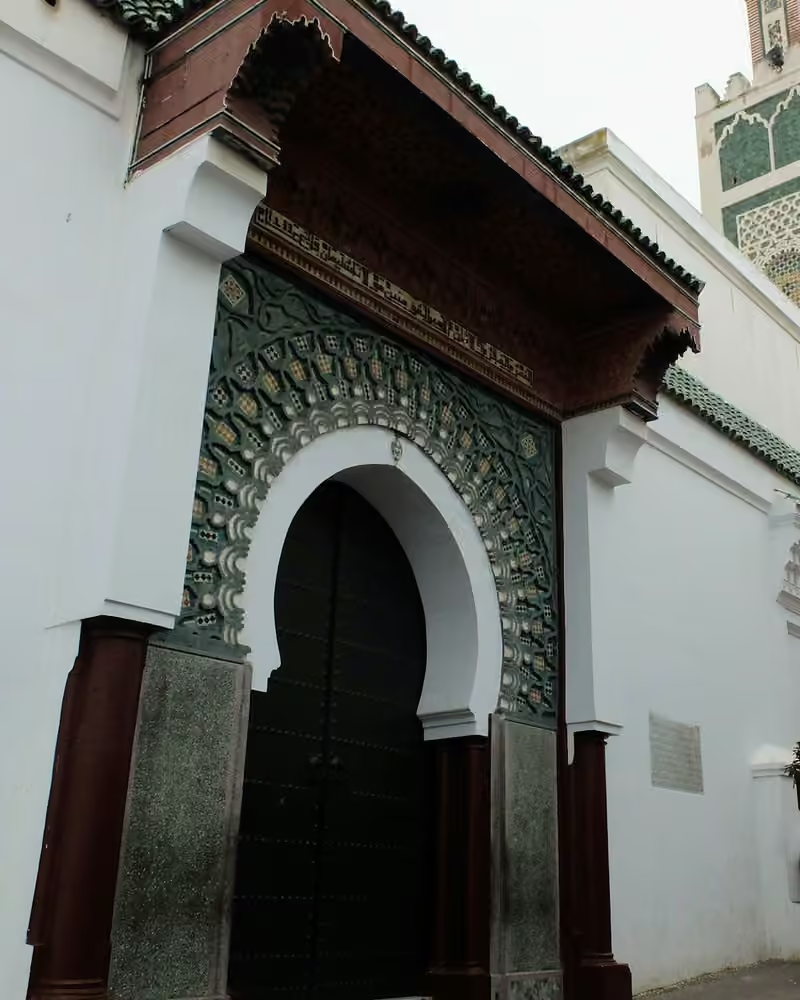
Islam is Morocco's official religion and sets the rhythm of daily life. The call to prayer rings out five times a day in every city and village of Morocco, Friday midday is the main prayer of the week, and the month of Ramadan changes the pace of the whole country: fasting from dawn to sunset, then long, lively evenings.
Morocco also has a long history of living side by side. Jewish communities have been part of the country for more than two thousand years, and in Tangier's medina a mosque, a Catholic church and old synagogues stand a few lanes apart.
- See it in Tangier
- The Grand Mosque, the church on Rue Siaghine and the synagogues of the medina
- Good to know
- Most mosques are open to Muslims only
Darija, Tamazight, French and Spanish
3. The languages Moroccans speak
Moroccans speak Darija, a Moroccan Arabic full of Amazigh, French and Spanish words. Arabic and Tamazight are the official languages, Tamazight since the 2011 constitution, and many Moroccans speak more than one Amazigh language at home.
French is widely used in business, schools and shops, and in the north, around Tangier and Tetouan, many people speak Spanish too. English is spreading fast among young people in Morocco, and in the travel trade you will rarely be stuck.
- Try
- Salam alaikum (hello) and shukran (thank you)
- Good to know
- Our guides speak English, French, Spanish and Arabic
The heart of it all
4. Moroccan hospitality
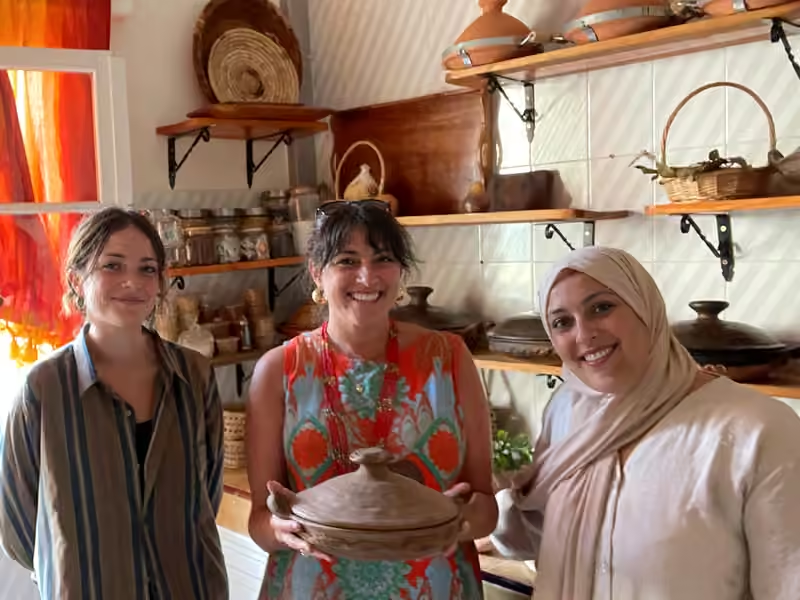
Moroccan hospitality is famous around the world for a reason: welcoming a guest is treated as a duty and an honour, whether the guest is a friend or a stranger. Visitors are offered tea on arrival, in a home, a shop or a guesthouse, and are often invited to share a meal, even unannounced.
At the table, hosts insist that guests eat more, a sign of their welcome. When you are invited to a home, a small gift is appreciated: pastries, dates or a box of tea. And on the street, people will often go out of their way to help with directions or advice.
- See it in Tangier
- A cooking class in a family home
- Try
- Bringing pastries or dates when invited
- Good to know
- Saying no to a second helping takes a few tries
Atay, the national drink
5. The Moroccan mint tea ceremony
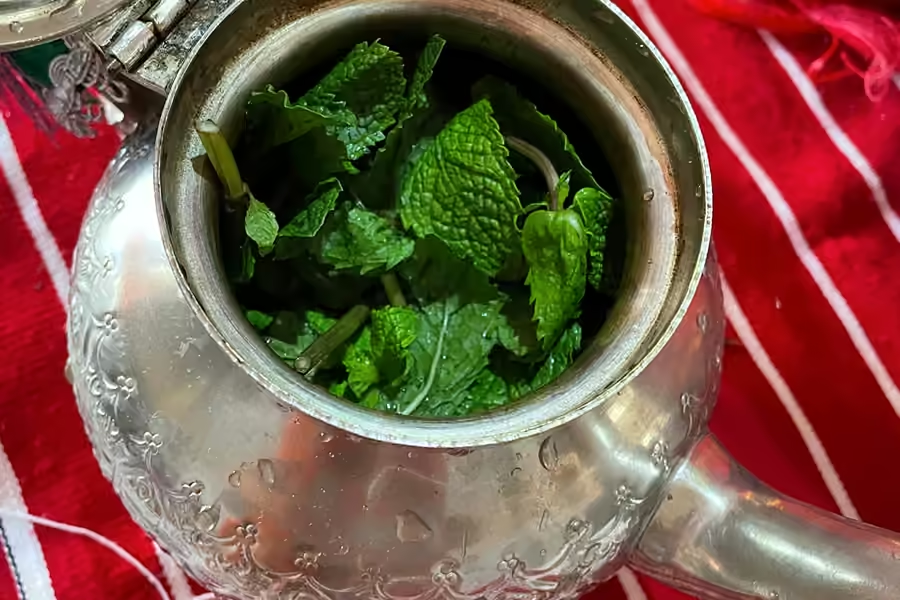
Serving mint tea, atay, is far more than offering a drink: it is a gesture of welcome and the start of a conversation. Green tea, fresh mint and plenty of sugar are brewed in a silver teapot, then poured from high above into small glasses to raise a froth on top.
Refusing the first glass is considered impolite, and the tea usually comes three times. A Moroccan saying describes the three glasses: the first as gentle as life, the second as strong as love, the third as bitter as death.
- See it in Tangier
- Café Hafa above the Strait, or the Petit Socco
- Try
- Accepting at least the first glass
- Good to know
- Ask for less sugar if you like: bla sukkar
The first glass is as gentle as life, the second as strong as love, the third as bitter as death.
A culinary embrace
6. Moroccan cuisine and the shared table
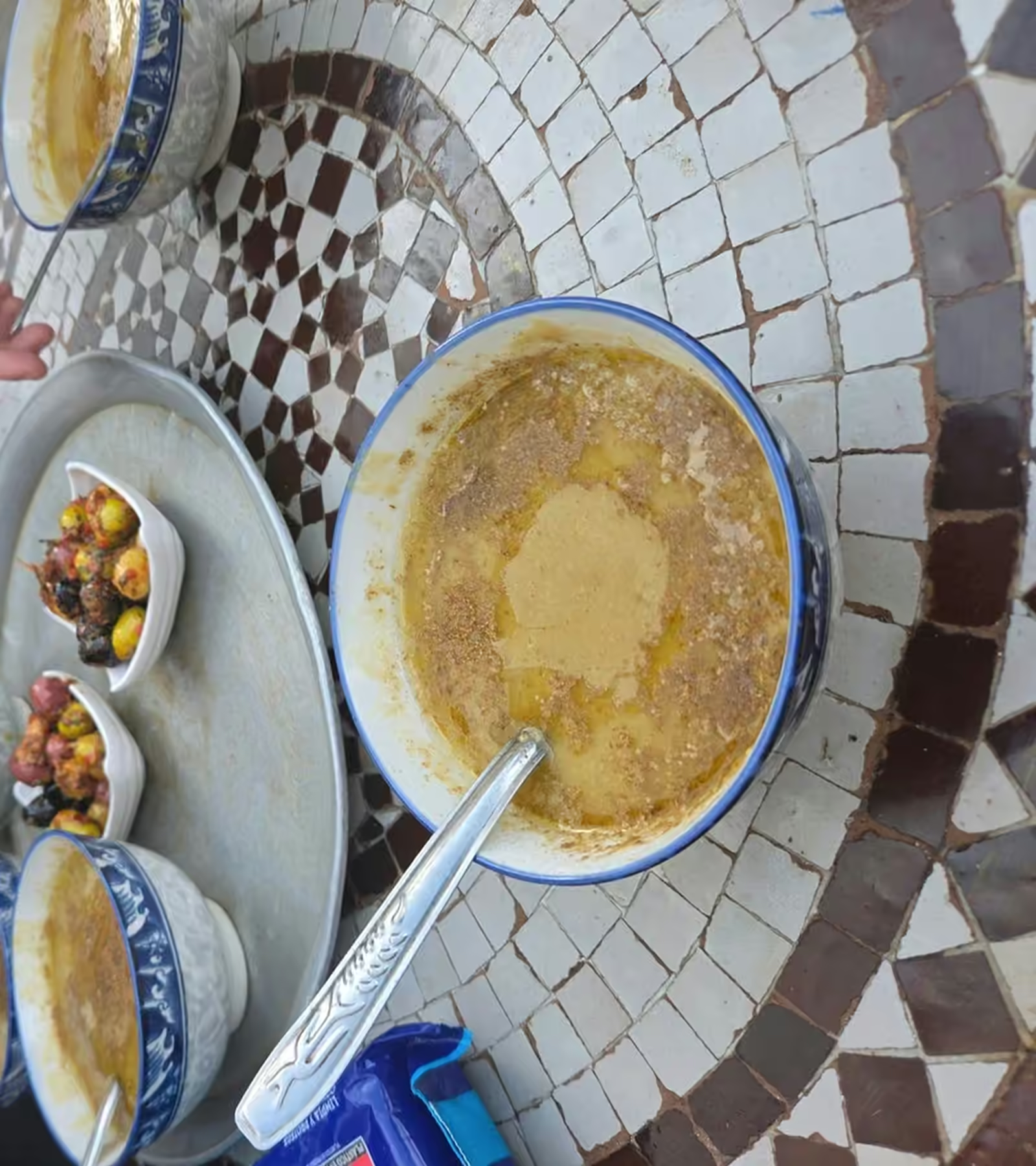
Moroccan cuisine mixes Amazigh, Arab, Andalusian and African flavours, and it is built on spices: cumin, ginger, turmeric, saffron, paprika and ras el hanout, a blend of many spices, with fresh coriander and parsley, preserved lemons, olives and argan oil.
Two dishes stand out. The tagine is named after the clay pot it slow-cooks in, with meat, vegetables and often fruit. Couscous, steamed semolina with a stew of meat and vegetables, is the family meal after Friday prayers. Add harira, the soup that breaks the fast in Ramadan, pastilla, a sweet and savoury pie, and street food such as msemmen flatbreads, sfenj doughnuts and fresh orange juice. In Tangier, local mornings start with bissara, a fava bean soup, and kalinte, a warm chickpea flan. Meals are shared from one dish, with bread to scoop up the food.
- See it in Tangier
- The food stalls of the medina and the Grand Socco market
- Try
- Eating with bread and your right hand
- Good to know
- Couscous is a Friday dish in most homes
Made by hand
7. Moroccan and Berber crafts
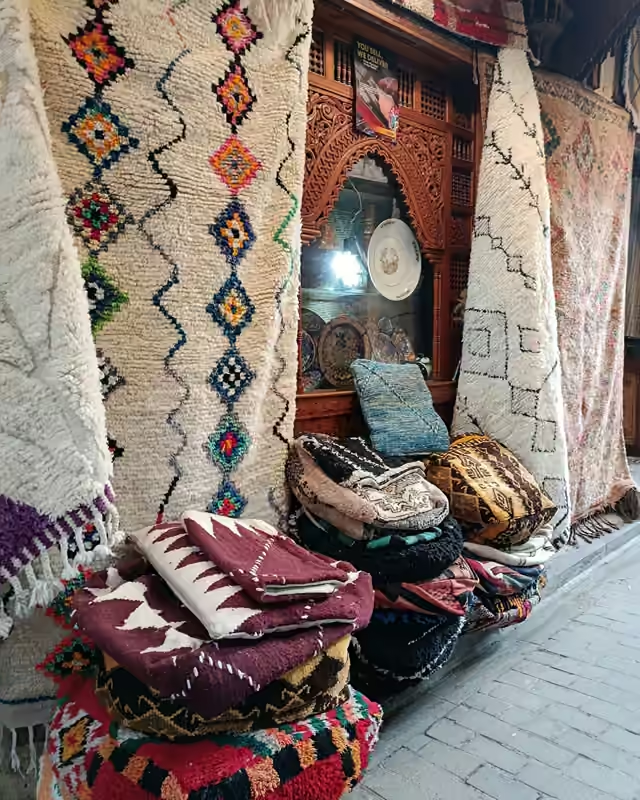
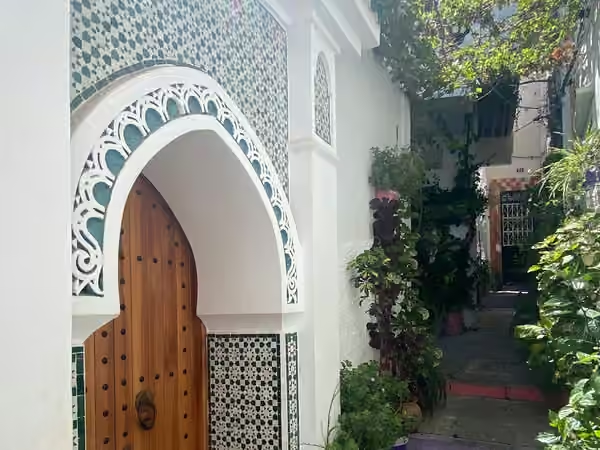
Moroccan crafts are still made by hand in workshops across the country, with skills passed down from one generation to the other. Zellige, the mosaic of hand-cut tiles, covers palaces, mosques and riads in geometric patterns. Cedar is carved into ceilings, doors and furniture, and plaster is cut into patterns as fine as lace.
Leather from the tanneries becomes bags, poufs and babouche slippers; pottery changes from region to region, from the blue of Fes to the earthy tones of Amazigh ceramics. The carpets woven by Amazigh women in the Atlas are more than floor coverings: their symbols and colours tell the story of a tribe and of the woman who made them.
- See it in Tangier
- The souks of the medina and the Kasbah
- Try
- Bargaining, with a smile
- Good to know
- Ask where a piece was made and by whom
From Andalusia to Gnawa
8. Moroccan music
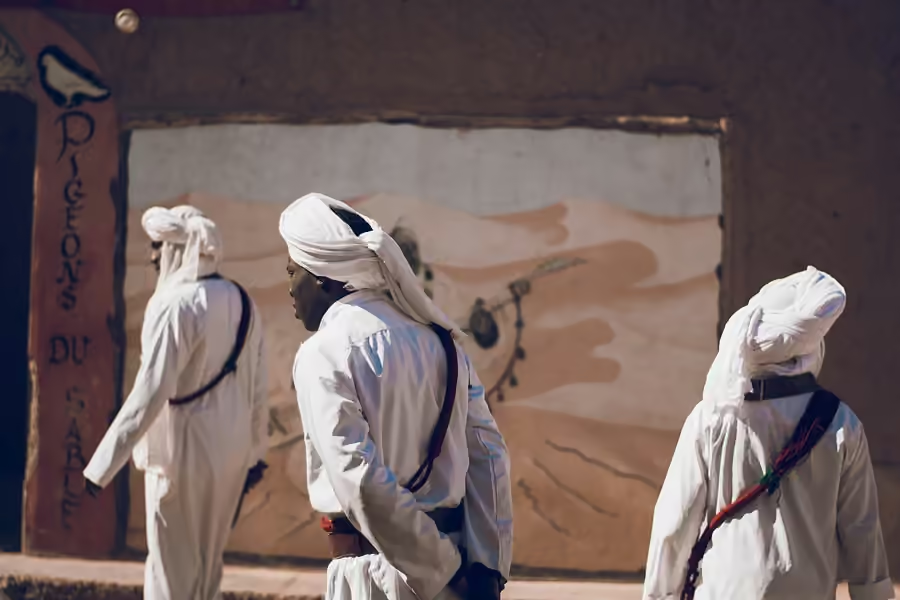
Moroccan music is as varied as its people. Andalusian classical music, with its roots in medieval Spain, is played by traditional orchestras with the oud, the violin and the qanun. Gnawa music, brought by people from sub-Saharan Africa, is spiritual and hypnotic, with call-and-response singing, the three-stringed guembri and the metal qraqeb castanets.
Amazigh music changes from region to region, with the bendir frame drum and the rhaita reed pipe at weddings and festivals. In the hills south of Tangier, the Master Musicians of Jajouka play a music that fascinated the writer Paul Bowles and Brian Jones of the Rolling Stones.
- See it in Tangier
- Weddings and festivals in summer, Gnawa evenings in the medina
- Good to know
- Music is part of every family celebration
Moroccan customs and traditions
9. Moroccan customs every visitor should know
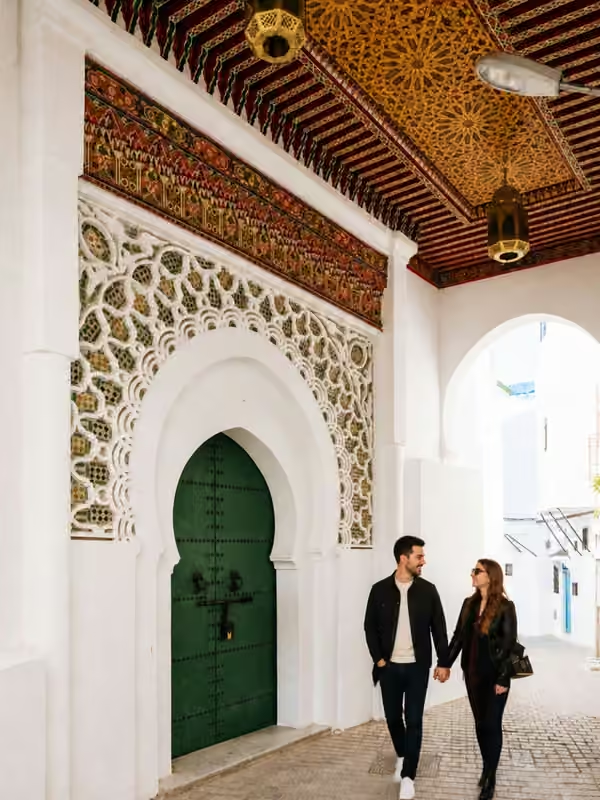
A few customs go a long way in Morocco. Greet people with salam alaikum, use your right hand to eat and to give or take things, and take your shoes off in a home when your hosts do. Ask before you photograph people, and accept the tea you are offered.
During Ramadan, eat and drink discreetly in the street during the day. Bargaining is normal in the souks, less so in shops with fixed prices. Most mosques are open to Muslims only; the Hassan II Mosque in Casablanca welcomes visitors on guided tours. As for clothes, comfortable clothes and shoes are best for the medina's slopes; otherwise, wear what you would wear at home in Europe or the US.
- Try
- Salam alaikum when you walk into a shop
- Good to know
- Many shops close for the Friday midday prayer
Through the year
Moroccan holidays and festivals
The month of fasting
Ramadan
Fasting from dawn to sunset, then harira, dates and long evenings out. Its dates move each year with the lunar calendar.
The end of Ramadan
Eid al-Fitr
Two days of family visits, new clothes, prayers and pastries.
The feast of the sacrifice
Eid al-Adha
The biggest family feast of the year, when families share a sheep with relatives and neighbours.
30 July
Throne Day
The national holiday for the king's accession, with flags on every street; Independence Day follows on 18 November.
Putting it together
A day of Moroccan culture in Tangier
Taste, craft and conversation in one day, the way our guides plan it.
- 9:30
The medina with a guide
The Kasbah, the Grand Mosque, the church and the synagogues, a few lanes apart.
- 11:00
Market and cooking
Shop for spices at the market, then cook a tagine in a family home.
- 14:00
Lunch at the family table
The meal you cooked, shared from one dish, with mint tea.
- 16:30
Crafts in the souks
Carpets, leather and pottery, with someone to explain them.
- 18:30
Tea above the Strait
Mint tea at Café Hafa as the sun goes down.
Or let a guide take you
 Tangier + Cooking Class6 hours · berber chef · from $95
 Tangier Shopping Tour3 hrs · souks & crafts · from $30
 Tangier Private Walking Tour2–3 hrs · stopovers & couples · from $25
Prefer to eat your way round? The Tangier food tour covers the street food and the markets.
Good to know
Moroccan culture: your questions
What is Moroccan culture known for?
Its hospitality and mint tea, its food, above all the tagine and couscous, its crafts such as zellige tiles, carpets and leather, its music from Andalusian to Gnawa, and a mix of Amazigh, Arab, Andalusian and African roots.
What languages do people speak in Morocco?
Darija, Moroccan Arabic, is spoken by most people. Arabic and Tamazight are the official languages, French is widely used, and in the north around Tangier many people also speak Spanish.
What customs should visitors know in Morocco?
Greet people with salam alaikum, use your right hand to eat and to give things, accept the tea you are offered, ask before photographing people, and eat discreetly in the street during Ramadan.
Is it rude to refuse mint tea in Morocco?
Refusing the first glass can seem impolite, because tea is how Moroccans welcome a guest. Accept one glass, even a small one; you can ask for less sugar.
What should I wear in Morocco?
Comfortable clothes and good shoes for the medina's slopes and steps. Otherwise, visitors wear what they would wear at home in Europe or the US.
Can non-Muslims visit mosques in Morocco?
Most mosques are open to Muslims only, but you can admire them from outside. The Hassan II Mosque in Casablanca is open to visitors on guided tours.
More from the journal
Keep reading
Ready when you are
Live Moroccan culture in Tangier
Tell us your dates and what you would like to see, taste or learn. A licensed guide replies within 12 hours with a plan and an exact price, and there is nothing to pay until the day.
- No deposit
- Free cancellation 48h before
- Reply within 12 hours
Photos: Tour Guide Tangier, except the Souk Dakhel (Brahim FARAJI, CC BY-SA 4.0), the Grand Mosque (Robert Prazeres, CC BY-SA 4.0), the carpets (AdilElouarti, CC0) and the Gnawa musicians (Withkarim, CC BY-SA 4.0), all via Wikimedia Commons.