The Tangier JournalWritten by licensed guides
History · Where continents kiss
History of Tangier: From Tingis to the International Zone
Tangier has been Berber, Phoenician, Roman, Arab, Portuguese, English, international and Moroccan. Here is the history of the city where Africa and Europe meet, from the legend of Tingis to the International Zone and the Tangier of today.
In this article 13 sections
In short
The history of Tangier at a glance
Tangier is one of the oldest cities in Morocco. Founded as a Phoenician port, it became Roman Tingis, the capital of a province, then an Arab and Moroccan city from 702. Portugal held it from 1471, England from 1661 to 1684, and from 1925 to 1956 it was the Tangier International Zone, run by foreign powers. It rejoined Morocco on 29 October 1956 and is today one of the country's great ports.
- 01Myth and the PhoeniciansFirst millennium BCE
- 02Roman Tingis1st century BCE to the 5th century
- 03Vandals and Byzantines5th to 7th century
- 04Islamic Tangier702 to 1471
- 05Portuguese Tangier1471 to 1661
- 06English Tangier1661 to 1684
- 07The city of diplomats1684 to 1912
- 08The International Zone1925 to 1956
- 09Modern Tangier1956 to today
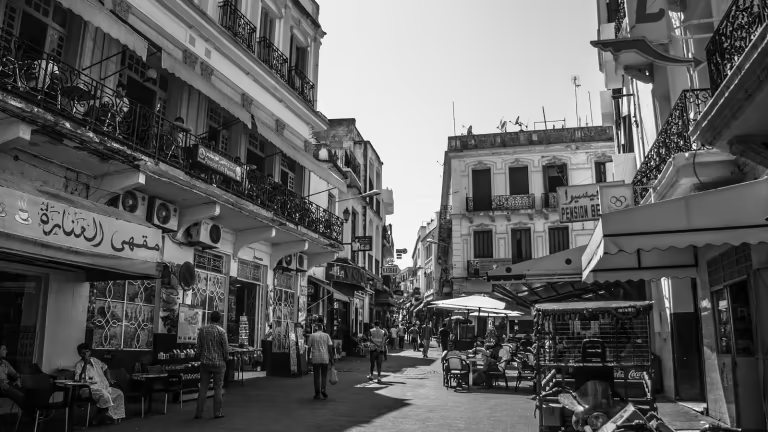
In one walk you can see most of it: the Phoenician tombs, the Kasbah of the sultans, the American Legation and the Grand Socco of 1947.
Perched on the northern tip of Africa and looking across the Strait of Gibraltar towards Europe, Tangier has been coveted, conquered, traded and transformed for more than 2,500 years. Few cities have changed hands so often, and each ruler left something behind.
Here is that story in nine chapters, from the legends to the International Zone and the Tangier of today, with the places in the city where each chapter can still be seen.
Legends and traders
1. The legend of Tingis and the Phoenician port
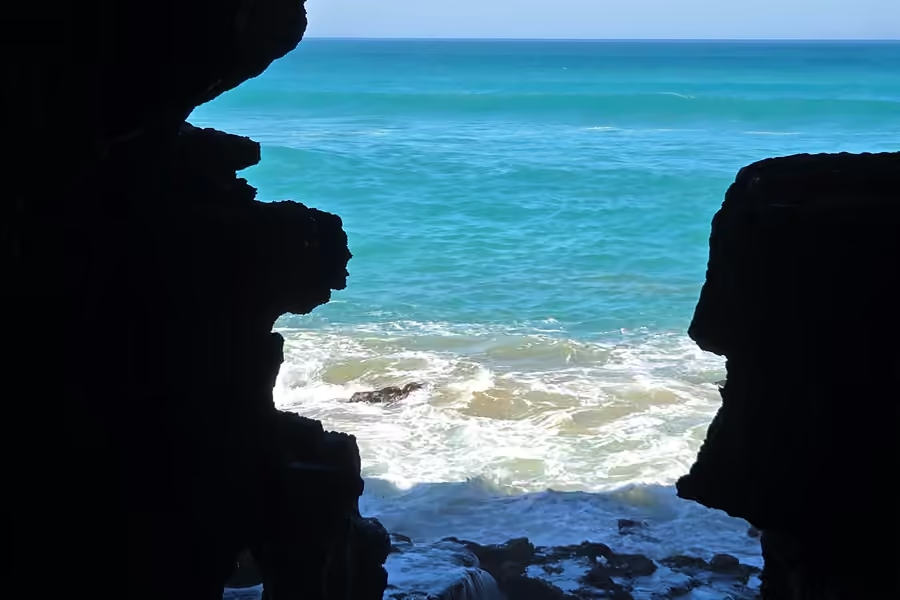
Tangier's story begins in legend. Greek myths tell of Tingis, wife of the giant Antaeus, whom Hercules defeated here; the hero then fathered a son with her, who founded the city and named it after his mother. The Caves of Hercules, west of the city, are still said to be where he rested.
History is plainer. Phoenician traders settled on the bay at least by the first millennium BCE, drawn by its command of the Strait, and by the 6th century BCE the town, called Tinga in Punic, was part of Carthage's trading world, a port linking the Atlantic coast of Africa and the Iberian Peninsula.
- When
- First millennium BCE
- See it in Tangier
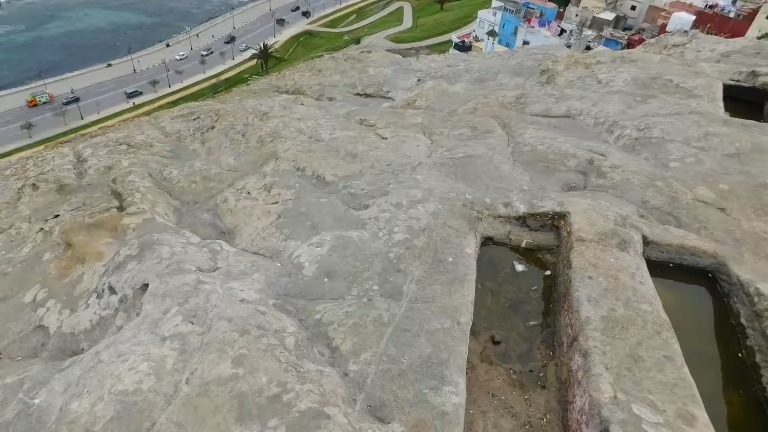
- The Phoenician tombs and the Caves of Hercules
A provincial capital
2. Roman Tingis, capital of Mauretania Tingitana
After the fall of Carthage, Tingis came under the Berber kings of Mauretania, allies of Rome. Augustus made it a free city, and Claudius raised it to a Roman colony, Colonia Iulia Tingi, and made it the capital of the new province of Mauretania Tingitana, which took its name from the city.
Roman Tingis was famous for its garum, a fermented fish sauce traded across the empire, and roads linked it with Volubilis and Sala, near Rabat. It was largely Christian by the 4th century, and under Diocletian's reforms the province was attached to the diocese of Hispania, with Tingis still its seat.
- When
- 1st century BCE to the 5th century
- See it in Tangier
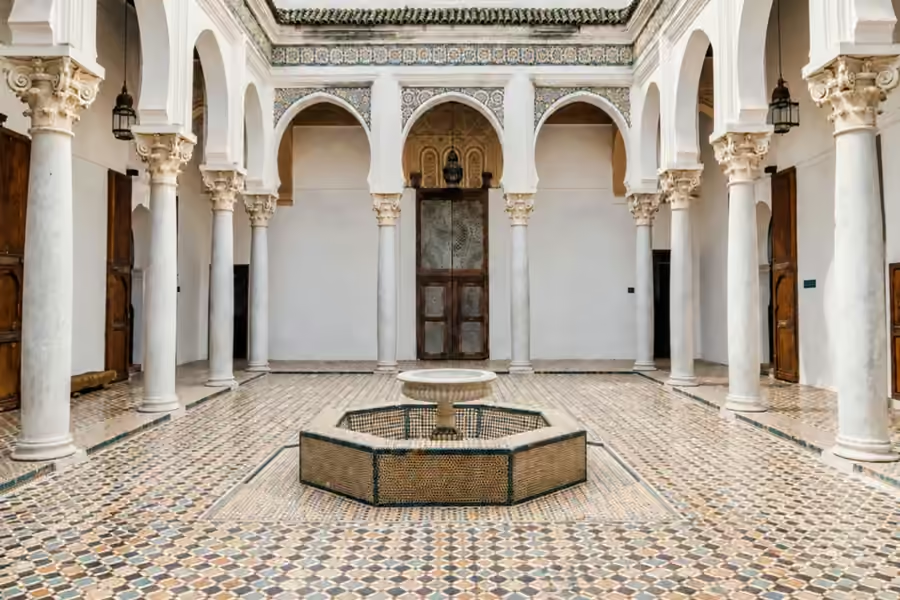
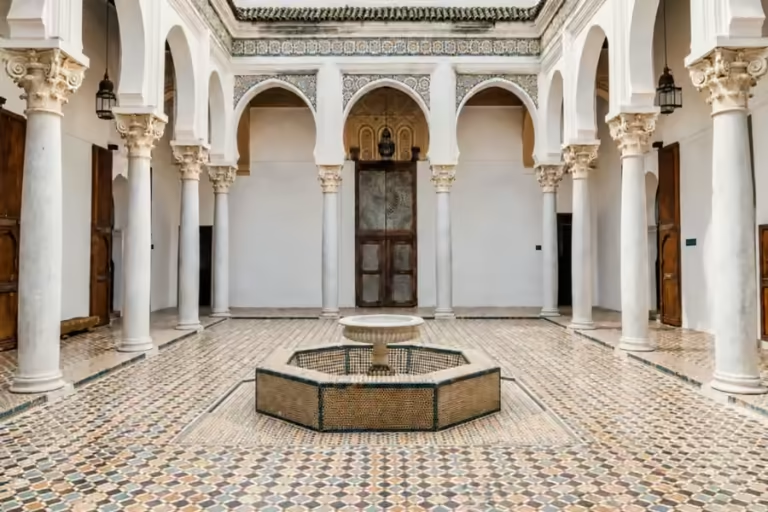
- The Roman rooms of the Kasbah Museum
The end of antiquity
3. Vandals and Byzantines
Around 429 the Vandals crossed from Spain and swept along North Africa, taking Tingis on their way to Carthage. A century later, the Byzantine Empire of Justinian reclaimed parts of the old Roman world and restored imperial control over the Strait.
The Byzantines fortified their outposts and built churches, but the city's trade had faded. This was the last chapter of antiquity in Tangier, before a new power arrived from the East.
- When
- 5th to 7th century
Tanja
4. Islamic Tangier and the medieval dynasties
In 702 the armies of the Umayyad Caliphate, led by Musa ibn Nusayr, took Tangier. In 711 his lieutenant Tariq ibn Ziyad, an Amazigh commander, crossed the Strait from here to begin the Muslim conquest of Spain; the Rock of Gibraltar, Jebel Tariq, still carries his name.
Under Islamic rule the city, now Tanja, passed from the Idrisids to the Almoravid and Almohad empires, then to the Marinids. It stayed a trading port between Africa, Europe and the Middle East, and in 1304 it was the birthplace of Ibn Battuta, one of the greatest travellers of the Middle Ages.
- When
- 702 to 1471
- See it in Tangier
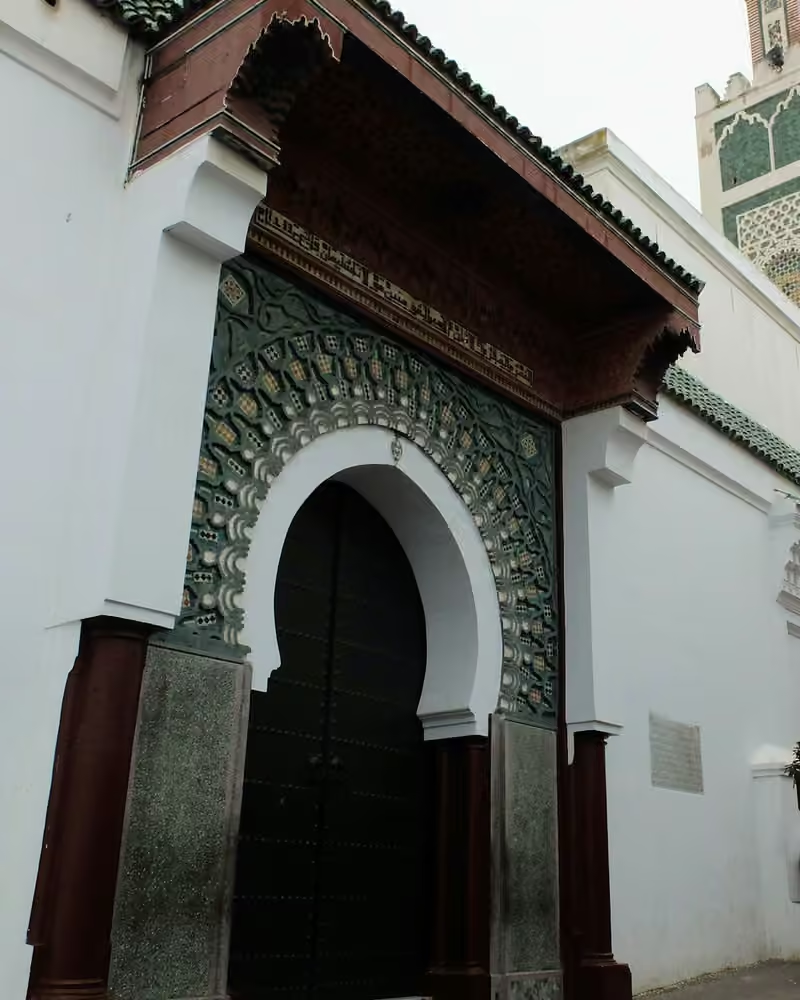
- The Grand Mosque and the tomb said to be Ibn Battuta's
A coveted prize
5. Portuguese and Spanish Tangier
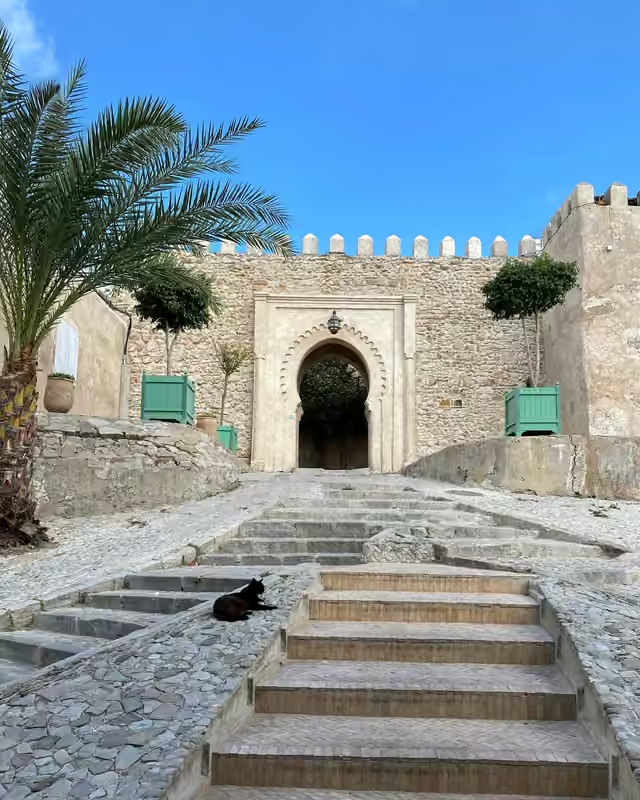
After taking Ceuta in 1415, Portugal set its sights on Tangier. Its attacks failed in 1437 and in the years that followed, but in 1471, after Portugal captured Asilah, the people of Tangier left the city and King Afonso V's troops occupied it.
The Portuguese held Tangier for nearly two centuries. They shrank the city inside stronger walls and turned the great mosque into a cathedral. From 1580 to 1640, when the crowns of Spain and Portugal were united, Tangier was ruled from Madrid, though Portuguese officials still ran it day to day.
- When
- 1471 to 1661
- See it in Tangier
- The walls and gates of the Kasbah
A royal dowry
6. English Tangier, 1661 to 1684
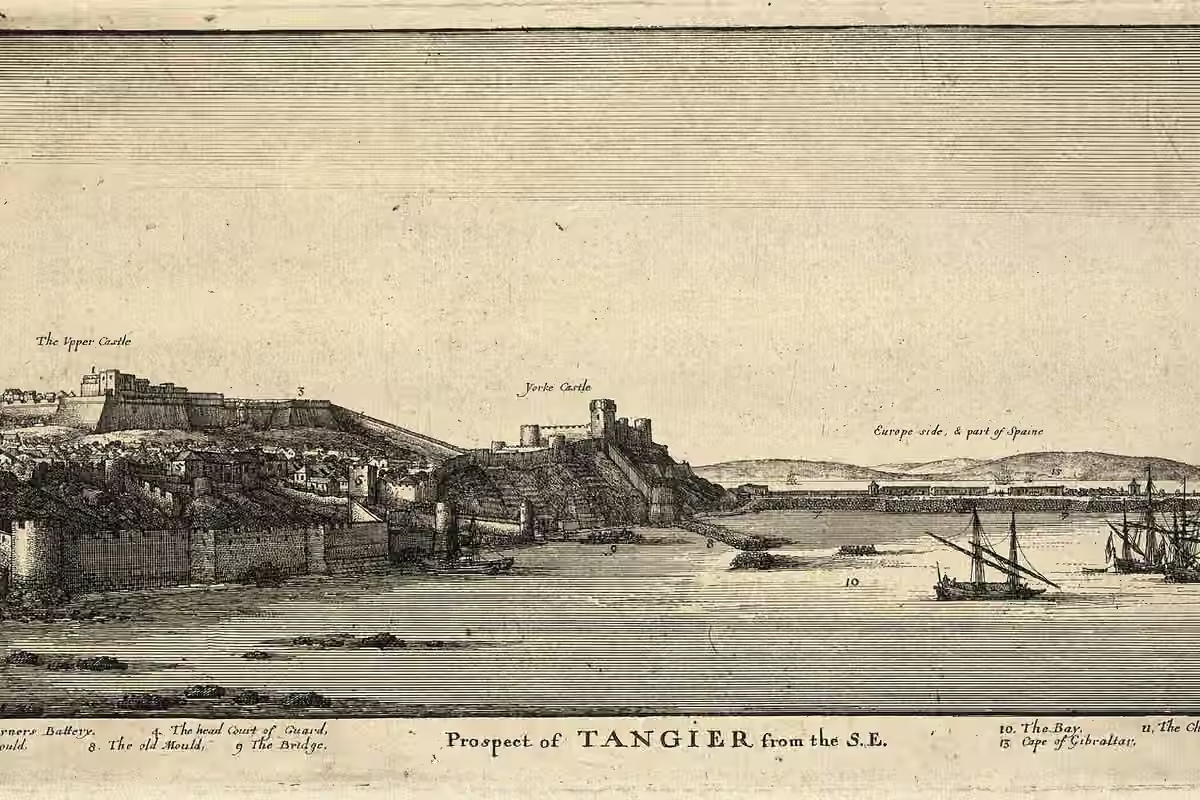
In 1661 Tangier became part of the dowry of the Portuguese princess Catherine of Braganza when she married King Charles II of England. The English planned a great naval base and built the Mole, a huge breakwater to shelter their fleet.
It never paid. Sultan Moulay Ismail's forces besieged the city again and again, and London tired of the cost. In 1684, after 23 years, the English left, blowing up the Mole and the walls before they sailed. Wenceslaus Hollar's etchings of 1669 show the city at its English height.
- When
- 1661 to 1684
- See it
- Hollar's etchings, at the top of this page
Alaouite Tangier
7. Alaouite Tangier, the city of diplomats
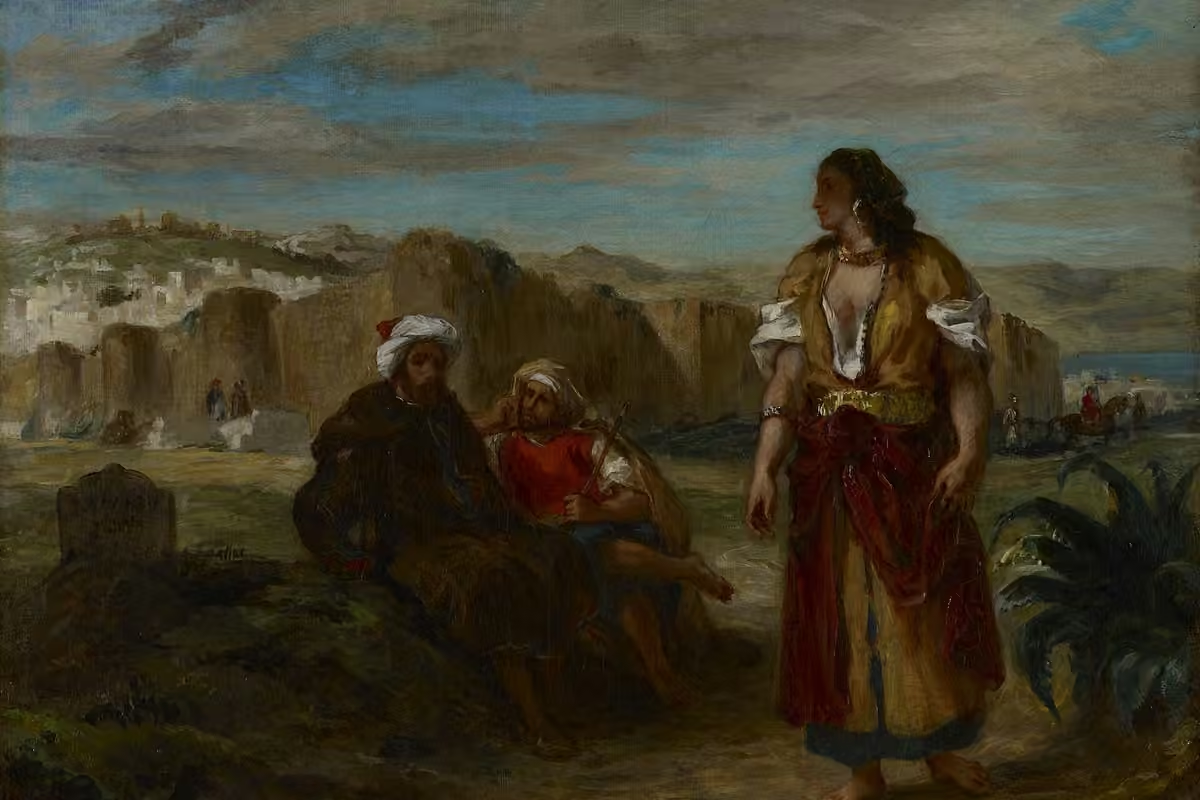
Back under Moroccan rule from 1684, Tangier became the sultans' window on the world, and the foreign consuls who lived there turned it into Morocco's diplomatic capital. In 1821 Sultan Moulay Suleiman gave the United States a building in the medina, the first American public property abroad; foreign consuls ran a Sanitary Council from 1840; and the painter Eugène Delacroix arrived with a French embassy in 1832.
Tangier even gave its name to a fruit: tangerines, grown around the city and shipped to Europe from its port, took the name of Tangier. In 1905 Kaiser Wilhelm II landed here to challenge France, and the Algeciras conference of 1906 set up the State Bank of Morocco in the city.
- When
- 1684 to 1912
- See it in Tangier
- The American Legation Museum, in the lower medina
1925 to 1956
8. The Tangier International Zone
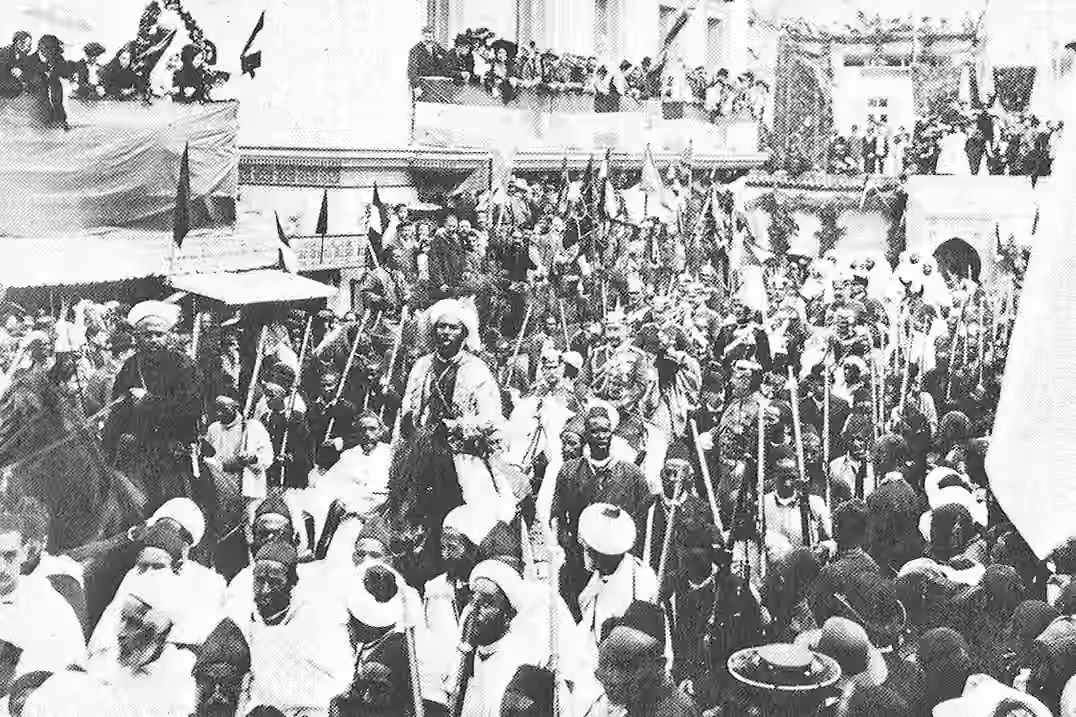
When France and Spain divided Morocco into protectorates in 1912, Tangier was set apart. The Tangier Protocol of 1923, in force from 1925, created the Tangier International Zone: about 380 square kilometres run by a group of foreign powers, including France, Spain, Britain, Italy, Portugal, Belgium, the Netherlands and Sweden, with the sultan represented by the Mendoub. Spain occupied it during the Second World War, from 1940 to 1945.
With low taxes, a free port and few rules, the Interzone drew bankers, smugglers, spies, writers and artists. Paul Bowles settled in 1947, William Burroughs wrote much of Naked Lunch here in the 1950s, and Moroccan nationalists used the city to organise. On 9 April 1947, Sultan Mohammed V gave a speech in Tangier calling for Morocco's unity and independence.
- When
- 1925 to 1956
- See it in Tangier
- The Grand Socco, Place du 9 Avril 1947, and the cafés of the Petit Socco
1956 to today
9. Reintegration and modern Tangier
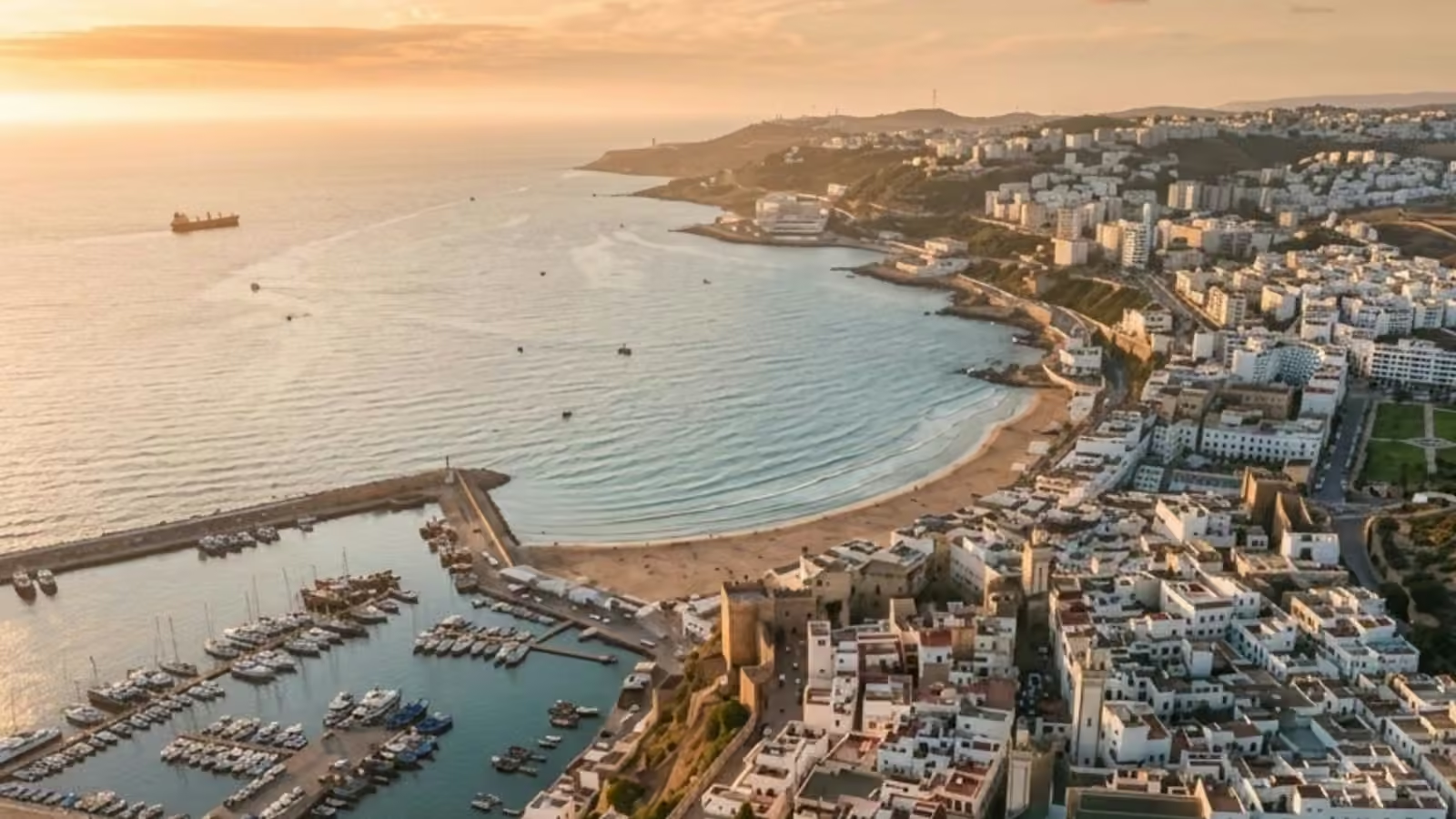
After Morocco's independence, the International Zone was dissolved on 29 October 1956 and Tangier rejoined the kingdom. Its free-port privileges lasted until about 1960, and the city became a favourite summer residence of the royal family.
Since the 2000s Tangier has been transformed. Tanger Med, opened east of the city in 2007, is one of the largest ports in Africa and the Mediterranean; the Al Boraq high-speed train reaches Rabat and Casablanca since 2018; and the old port has become a marina below a restored medina and Kasbah.
- When
- 1956 to today
- See it in Tangier
- The marina, the Corniche and the view from the Kasbah
Tangier's guests
Famous visitors to Tangier
1832
Eugène Delacroix
Came with a French embassy to the sultan; his Moroccan sketches changed his painting.
1912 and 1913
Henri Matisse
Painted Tangier from his room at the Hôtel Villa de France, above the Grand Socco.
1947 to 1999
Paul Bowles
The American writer and composer lived in Tangier for over fifty years; a wing of the Legation is his.
The 1950s
William Burroughs
Wrote much of Naked Lunch in Tangier; Jack Kerouac and Allen Ginsberg came to see him in 1957.
See it for yourself
A walk through Tangier's history
Every chapter of this page in one morning, the way our guides walk it.
- 9:30
The Kasbah
Portuguese walls, the sultan's palace and Roman Tingis in the Kasbah Museum.
- 10:45
The American Legation
The 1821 gift of the Sultan and the Paul Bowles wing.
- 11:45
The Petit Socco
The cafés of the Interzone, where writers and spies met.
- 12:30
The Grand Socco
Place du 9 Avril 1947, where Mohammed V spoke for independence.
Or let a guide tell the story
 Tangier Private Walking Tour2–3 hrs · stopovers & couples · from $25
 Tangier Full Day Tour6–7 hrs · first-time visitors · from $65
For the history of the whole country, read our history of Morocco.
Good to know
Tangier history: your questions
How old is Tangier?
More than 2,500 years old. It began as a Phoenician and Carthaginian port and became Roman Tingis, the capital of the province of Mauretania Tingitana.
What was the Tangier International Zone?
From 1925 to 1956, Tangier and the land around it, about 380 square kilometres, were run by a group of foreign powers under the Tangier Protocol of 1923, with the sultan represented by the Mendoub. It was a free port with low taxes, famous for its bankers, spies and writers.
Why was Tangier an international city?
Because of its position on the Strait of Gibraltar, no single European power would let another control it. When France and Spain divided Morocco in 1912, the powers agreed to run Tangier together.
When did Tangier become part of Morocco again?
On 29 October 1956, a few months after Morocco's independence, when the International Zone was dissolved.
Who has ruled Tangier?
Phoenicians and Carthaginians, Berber kings, Romans, Vandals, Byzantines, the Arab and Moroccan dynasties from 702, Portugal from 1471, Spain from 1580 to 1640, England from 1661 to 1684, then Morocco, with the International Zone from 1925 to 1956.
Is the tangerine named after Tangier?
Yes. The fruit, grown around Tangier and shipped to Europe from its port, took the city's name in English.
More from the journal
Keep reading
Ready when you are
Walk through Tangier's history with a licensed guide
Tell us your dates and the chapters that interest you most. A licensed guide replies within 12 hours with a plan and an exact price, and there is nothing to pay until the day.
- No deposit
- Free cancellation 48h before
- Reply within 12 hours
Images via Wikimedia Commons: Wenceslaus Hollar's etching of 1669, Eugène Delacroix's View of Tangier and the 1905 photograph (all public domain), the Grand Mosque (Robert Prazeres, CC BY-SA 4.0); other photos by Tour Guide Tangier.